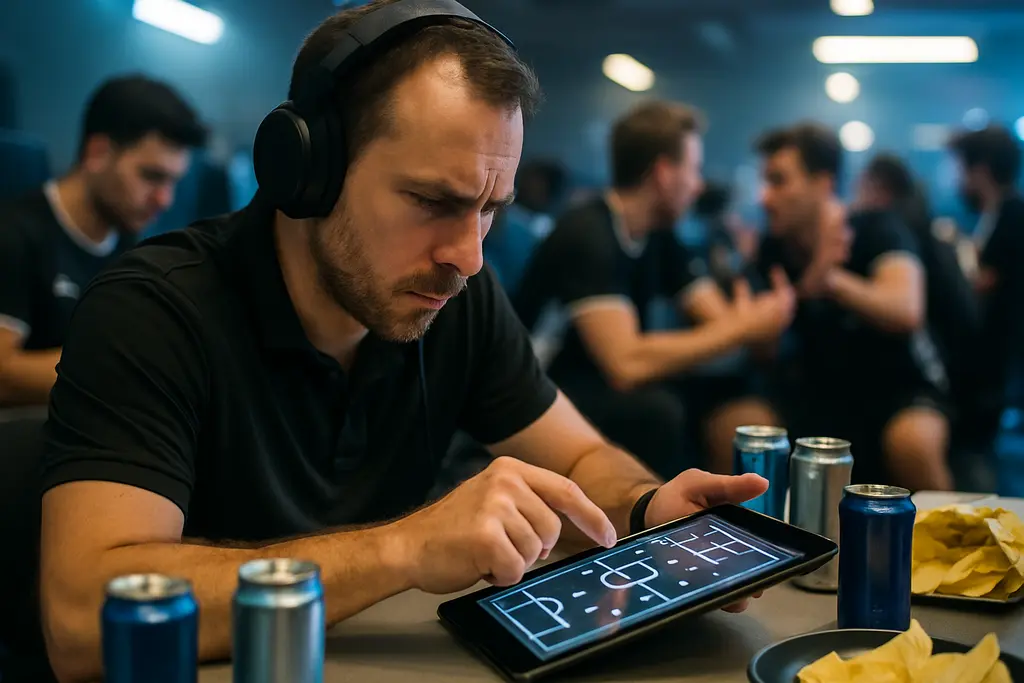
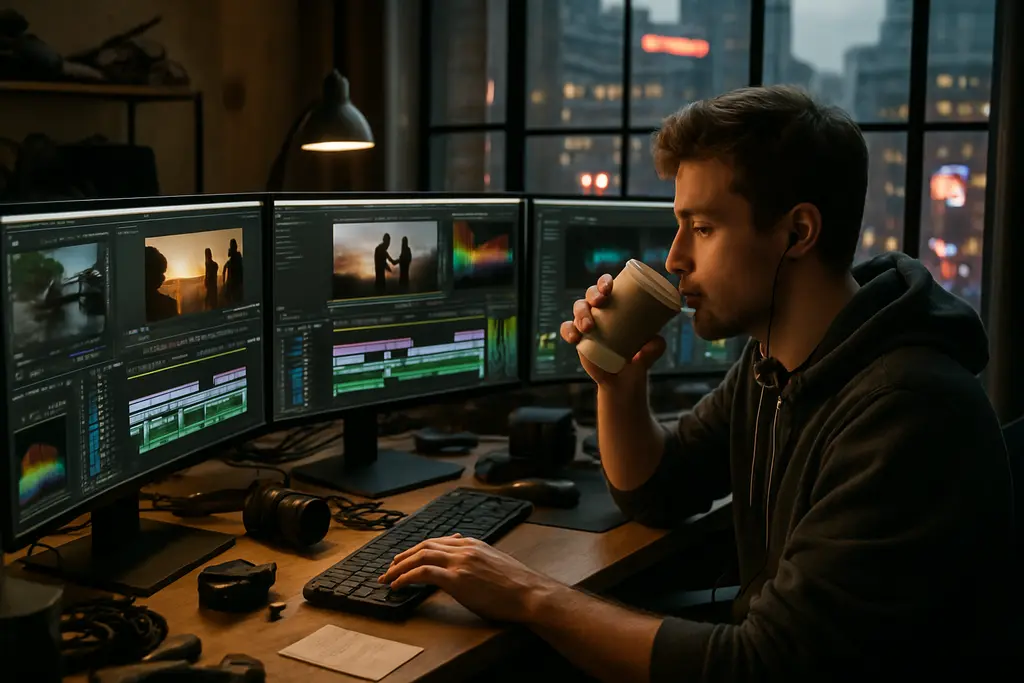
AI Video Workflows have moved from a side experiment into a real production question for streamers, esports creators, casters, and editors who are trying to keep up with short-form demand without burning out. The useful framing is not whether AI replaces creator taste. It is whether AI changes the parts of the job that were already repetitive: transcribing VODs, cutting highlights, testing formats, translating clips, cleaning audio, and preparing assets for several platforms after one stream.
The research available in 2026 is stronger on broadcast and video-industry adoption than on esports-only creator adoption, so the safest read is cautious. Streamers operate at a smaller scale than broadcasters, but they face a similar content problem: one live session can turn into a VOD, a Shorts package, a TikTok cut, a sponsor segment, and a community post. That is where automation starts to matter. For additional insights into production technology outside of gaming, check out Rave Tech’s coverage as it is part of the same network.
Why AI Video Workflows Moved From Novelty To Routine
Adoption Is No Longer A Fringe Signal
Bitmovin’s 2026/2027 Video Developer Report, based on 486 video industry professionals, reported that 98% of respondents used AI or machine learning for video workflows, with 46% using those tools every day, according to TVBEurope’s report on the survey. That does not mean every Twitch streamer or YouTube editor is running the same stack as a media company. It does show that the video pipeline around creators is being reshaped by tools that are now normal inside professional production rooms.
The same report listed the most common uses as audio transcription, translation and foreign dubbing at 48%, content recommendation at 34%, and visual quality and optimization at 30%. Those categories map closely to creator pain points. A streamer may not need a full broadcast operation, but they do need captions that do not take an hour, a title or clip system that finds a strong moment, and localized versions if the community is split across languages.
AI Video Workflows And The Time Budget
The strongest argument for AI Video Workflows is not glamour. It is time. A mid-size gaming creator often has to choose between more live hours, more editing, more community interaction, or rest. Any tool that can remove the first pass of transcription, rough clipping, or formatting shifts labor from mechanical work to judgment. The creator still has to decide what is funny, fair, on-brand, and worth publishing. AI can surface candidates; it cannot understand a community joke the way a regular viewer does.
That distinction matters in esports content. A highlight from a ranked match, a scrim discussion, or a tournament co-stream can carry context that an automated tool may miss. A clip can look exciting while still misrepresenting the player, the opponent, or the event state. The best creator teams will treat AI output as a draft, not as a publish button.
Where Streamers Feel The Change First
Clips, Captions, And Localization
For streamers, the first visible shift is short-form packaging. A creator can stream for three hours and then face the real grind after going offline: find the moment, trim the dead air, crop for vertical viewing, add captions, write a title, and repeat. AI-assisted editing tools compress parts of that chain. The value is strongest for creators without a dedicated editor, because the gap between live performance and post-production has always limited how often smaller channels can publish.
Localization is a second pressure point. The Bitmovin survey’s top AI category included transcription, translation, and foreign dubbing. In gaming, that can help a creator test clips beyond their main-language audience. It can also create trust issues if dubbing or voice work is not labeled clearly. Fans tend to accept editing help. They are less forgiving when identity, voice, or intent feels blurred.
Recommendations Are Part Of The Workflow Too
Content recommendation at 34% in the Bitmovin data should not be read as a back-end detail only. Recommendation systems shape what creators make. If a platform rewards a certain clip length, opening beat, or posting rhythm, creator workflows bend around it. That is why AI editing and platform discovery are linked. The creator is not only cutting video faster; they are often cutting toward a system that decides whether the work gets seen.
That pressure also explains why platform-native AI matters. Our related coverage of YouTube AI tools for creators looked at how editing, testing, live features, and identity safeguards are being pulled closer to the platform layer. For gaming creators, the platform is not just a distribution endpoint. It increasingly becomes part of production.
The Career Risk Behind Faster Production
Efficiency Can Raise The Posting Bar
The Haivision 2026 Broadcast Transformation Report, released on March 4, 2026, surveyed around 1,300 broadcast professionals globally and found AI usage among broadcasters rose from 25% in 2025 to 27% in 2026; 64% expected AI to have the greatest impact on broadcast production over the next five years, according to Haivision’s announcement. That gap is worth paying attention to. Current use grew only slightly, but expectations were much larger. In creator terms, many teams may still be testing, while planning for a heavier shift.
For streamers, faster tools can create a harsher baseline. If everyone can cut clips faster, audiences may start expecting more frequent uploads. That helps creators who already have clear formats and strong judgment. It may hurt creators who are already stretched, because the saved time can get swallowed by higher output demands. The gain is real, but it is not automatically healthy.
Editors Still Matter
The editor role is likely to change before it disappears. A good gaming editor understands pacing, meme timing, sponsor safety, competitive context, and the creator’s relationship with chat. AI can shorten the rough cut. It can suggest captions or clean audio. It cannot fully judge whether a rage moment is funny, uncomfortable, or likely to start drama in the community.
That is especially true around esports-adjacent content. A clip from a pro player’s stream might involve team practice, patch opinions, or criticism of another player. Publishing the wrong cut can create a week of avoidable backlash. Human review is not just polish; it is risk control.
AI Video Workflows For Streamer Careers
The better read on AI Video Workflows is practical rather than dramatic. The tools are becoming part of the production floor, but the creator career still depends on taste, consistency, community trust, and restraint. Streamers who benefit most will be the ones who use AI to reduce low-value labor while keeping final judgment human.
For small creators, that may mean using AI for captions and first-pass clips. For larger channels, it may mean building a repeatable review chain where AI drafts, editors refine, and the creator approves. For esports personalities, casters, and former pros moving into content, the same rule applies: automation can speed up the work, but credibility is still earned in the edit.
The risk is treating every efficiency gain as a reason to publish more. The smarter move is to publish cleaner, with clearer labeling, better context, and fewer throwaway cuts. AI can make video production faster. It cannot replace the audience relationship that makes a stream worth clipping in the first place.