
Imagine 750 million viewers watching worldwide. $70 million+ prize pools. Three million people attending live. It’s not the Super Bowl – it’s the 2025 Esports World Cup.
What started as kids gaming in basements has grown into massive productions. These events use the latest technology and combine it with athletic competition.
The market is expected to reach $16.7 billion by 2033. This growth has led to a surge in event jobs that didn’t exist before. It’s not just about who’s playing anymore. It’s about creating entire worlds around the competition.
There are many roles in esports, from technical experts to VIP experience creators. These jobs offer a mix of traditional sports and digital-age twists. The scale requires professionals who can handle a tech startup, broadcast network, and international summit all at once.
This isn’t just a hobby anymore. It’s a cultural phenomenon that’s changing entertainment and creating new career paths.
Key Roles & Skills Needed
Do you think organizing office parties means you can run an esports tournament? That’s like thinking you can do brain surgery just because you’re good at Jenga. The truth is much more complex than a Korean StarCraft strategy.
Production roles in esports tournaments are like a specialized task force. Each role needs a mix of technical skills and creative problem-solving.
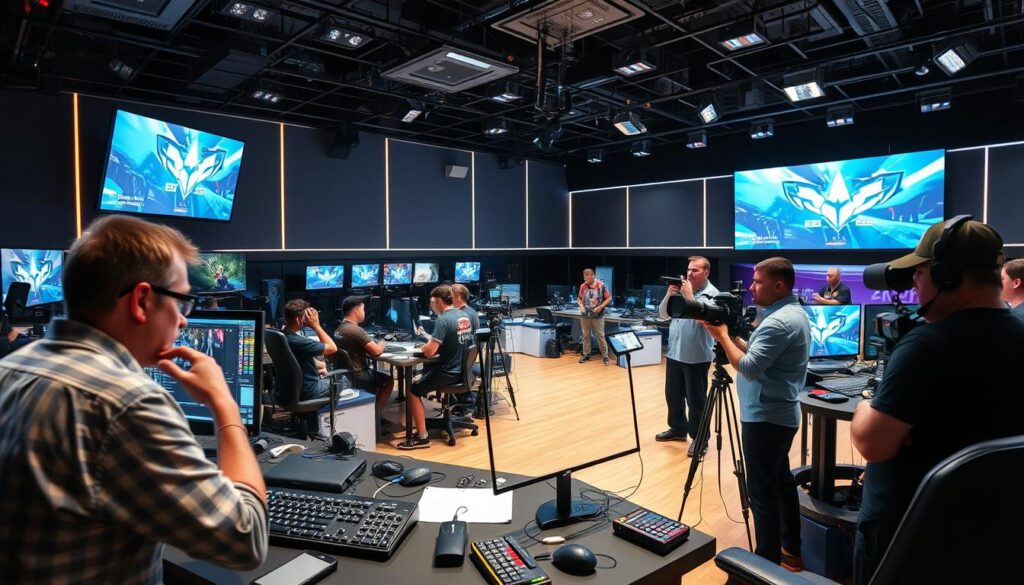
Event Producers are like the quarterbacks of the tournament. They manage huge budgets and find venues that fit both physical and digital needs.
Broadcast Producers work like film directors but with a lot of moving parts. They handle camera angles, graphics, and commentary for millions of viewers.
Technical Producers keep everything running smoothly. They prevent “the blue screen of death” during big moments. They work with top-notch broadcasting equipment.
Content Producers turn gameplay into stories. They make you care about pixelated characters like they’re Shakespearean heroes.
The skills needed are like a superhero origin story:
- Organizational skills that impress military strategists
- Technical knowledge of video editing and hardware
- Crisis management skills like UN negotiators
- Attention to detail that Sherlock Holmes would admire
Running a successful esports tournament is more than just knowing games. It’s about creating experiences that connect both online and offline. You need patience, technical skills, and creativity.
The best producers make chaos look like a well-choreographed dance. They turn disasters into moments fans remember for years. That’s the real goal in this digital arena.
How Esports Events Are Organized
Ever wonder what happens behind those flawless tournament streams? It’s a lot more complex than you think. Organizing esports events is like planning a huge party.
The logistics are mind-boggling. It’s not just about people and places. You’re dealing with digital stuff that’s way beyond what most people can handle. You have to manage player schedules, sponsor needs, and broadcasts across different time zones.
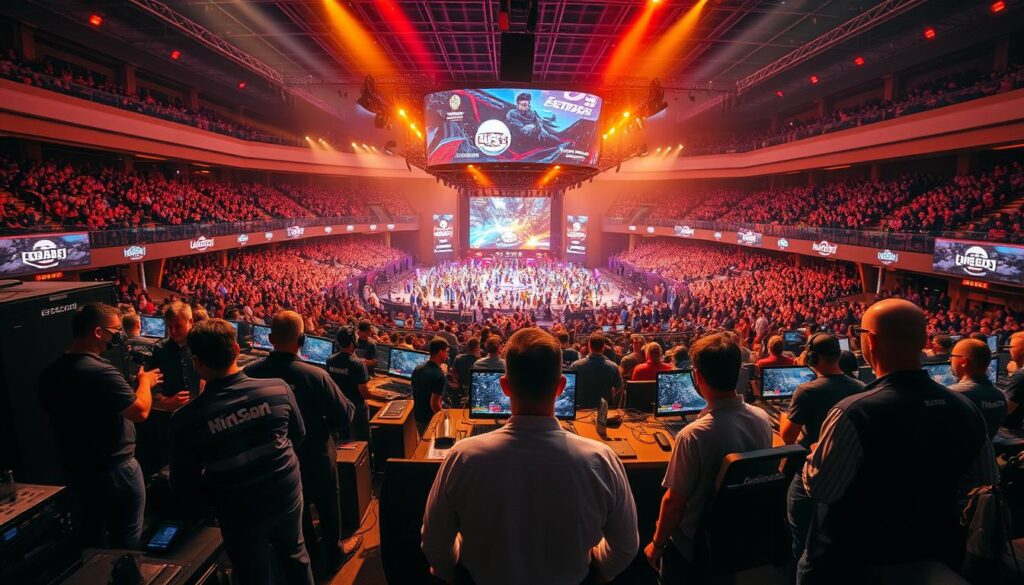
Take Shrinidhi Vaideeswaran at Ohio University. She runs Valorant broadcasts with incredible precision. She has to manage players, production teams, and sponsors like Red Bull. It all looks easy to viewers, but it’s not.
The real scene behind the scenes is chaotic but beautiful. There are miles of cables, backup plans, and lots of caffeine. It’s like a sport in itself.
Choosing a venue is just the start. You have to think about the internet setup, which is impressive. Then there’s the budget, which includes millions for prizes, production, and sponsorships. It’s not just planning an event; it’s a big digital project.
Good organizers know they’re creating cultural moments. They balance player needs, technical stuff, and what the audience wants. The logistics include:
- Synchronizing international competitors across time zones
- Managing sponsor relationships and activation requirements
- Ensuring broadcast-quality internet infrastructure
- Coordinating production teams and technical staff
- Handling last-minute substitutions and technical issues
The most important thing is digital infrastructure reliability. One small problem can ruin the whole event. Organizers act like emergency network experts, building systems that impress big companies.
Managing sponsors is also a big challenge. It’s not just about putting logos out there. You have to make sure the brand experience feels right for viewers. Meeting sponsor needs while keeping the event fair is tough.
Coordinating players is like trying to manage digital cats. They’re not like traditional athletes. You have to deal with international players, streamers, and pros who work on their own time. Getting everyone in the right place at the right time is a big job.
Broadcast production is its own challenge. You need to get camera crews, commentators, and tech staff to work together perfectly. It’s like organizing a big show.
Managing the budget is creative. You have to balance huge prize pools with production costs. Sponsor money is also a factor, and you need to make sure the event is profitable or sustainable.
When everything goes right, it’s amazing. The logistics work so well that viewers don’t see the chaos. That’s when you know you’ve done something special – created a moment in digital culture.
Breaking In: Education & Internships
Remember when gaming was a disappointment to your parents? Those days are over. Now, universities take esports as seriously as sports, with scholarships and career paths.
Universities like Central Michigan University and Ohio University offer esports certificates. These programs teach you to be a pro gamer. You get professional-grade equipment, coaching, and chances to meet people in the industry.
Scholarships now give digital athletes the same respect as athletes in sports. This is because universities see the value in strategic thinking and quick reflexes. These scholarships are real investments in talent.
Ohio University’s program goes deeper with specializations in game design, IT, and business. The industry needs more than just players. It needs experts in many areas.
Internships and hands-on experience are key. Students get to run tournaments, manage streams, and solve technical problems. It’s like getting ready for a real job.
This change means there are more event jobs available than before. For a beginner’s guide, check out this resource.
Now, you can study something you love and not disappoint your parents. It’s a great way to turn your passion into a career.
Success Stories
Success stories in esports event management are like Silicon Valley startup dreams. Except, these founders build empires in digital arenas, not garages. Jeff Kuhn at Ohio University shows how the industry has grown. He started with LAN parties and now leads a university esports program after 25 years.
Shrinidhi Vaideeswaran’s journey is inspiring. She moved from college broadcasts to big sponsor deals. Her story shows how talent can grow fast in esports. These stories highlight an ecosystem where careers grow quickly.
The tournament scene has changed a lot. Local events have turned into global invitationals. Faze Clan and Team Liquid host these, with production values like traditional sports.
When big brands like Coca-Cola, Intel, and MasterCard invest millions, you know esports is big. They see esports fans as loyal consumers. Sponsorship deals are huge, catching Wall Street’s attention.
These stories show esports management is a real career path with huge growth. Our comprehensive esports event management guide helps turn passion into a career. The arena is ready for your success story.
Conclusion
The esports industry is already a big deal, changing how we watch entertainment. It’s moved from small tournaments to huge arenas and online streams that reach millions. The esports event management guide shows how complex planning is now key, from picking venues to live streaming.
This isn’t just a hobby anymore; it’s a huge economic force. Big names like Intel and Red Bull are pouring money into it, creating jobs in many areas. You can work in production, marketing, or tech, not just playing games.
Planning esports events requires a lot of detail, mixing old-school event planning with new tech. It’s a field where learning meets chance, with programs like BCE’s courses readying the next generation.
So, what’s your next move? You’re at the beginning of a field that’s proven it’s here to stay. The real question is, how quickly can you join the action?