
By DeShawn Carter MostPlays.com | Published February 13, 2026
If you are still hoarding massive hard drives to save your 200GB game installs and hours of uncompressed gameplay footage, it’s time to wake up. We are deep into 2026, and the entire landscape of how we play, capture, and share our “most plays” has been completely flipped on its head.
The era of the $4,000 localized mega-rig is making room for a much more agile, connected, and instantaneous gaming culture. Today, creating viral gaming content sits at the intersection of three massive trends: server-side rendering, AI-assisted hardware, and the domination of the vertical video format.
Here is a look at the ecosystem powering the modern gamer’s setup.
1. The Death of the Download: Embracing the Game Cloud
The biggest friction point for sharing great gameplay used to be the barrier to entry. You couldn’t capture a viral moment in a AAA title if your PC couldn’t run it in the first place.
Now, the heavy lifting is done miles away from your desk. The sheer density of modern edge servers means latency has practically vanished for the average broadband user. We are seeing real-time, 4K rendering pushed directly to basic laptops and smart TVs. If you want to understand the backend infrastructure and the “edge” mechanics making this zero-latency utopia possible, the architects and developers over at Game Cloud Network are doing fascinating work building out the decentralized future of play.
When your game lives in the cloud, capturing your “most plays” is no longer a tax on your local CPU. The server simply clips the last 60 seconds of its own render and pushes it straight to your socials.
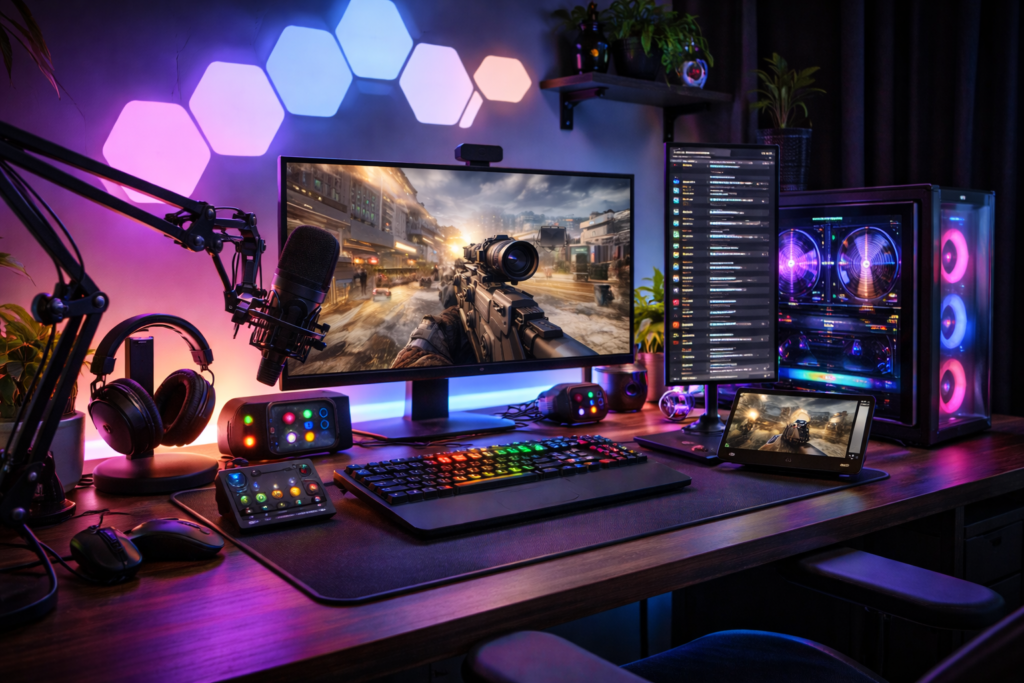
2. The Lean Setup: Tech That Gets Out of Your Way
Because the cloud is handling the graphics, the hardware focus for content creators has shifted entirely to presentation and comfort. You don’t need a massive tower; you need flawless audio, a crisp camera, and an ergonomic controller or handheld.
- AI-Enhanced Audio: The new standard for streamers is microphones with built-in neural processing to actively strip out the sound of keyboard clacking or background noise.
- Cloud-Native Handhelds: Dedicated Wi-Fi 7 handhelds with OLED screens are dominating the market, acting as pure conduits for cloud libraries.
Before you drop money on upgrading your setup, you need to know what actually matters for this new era. We highly recommend checking the rigorous, no-nonsense hardware reviews over at Rave-Tech.com to find out which peripherals are actually worth the investment and which are just marketing hype.
3. The Vertical Shift: How We Watch the “Most Plays”
You’ve got the cloud running the game, and the tech capturing your face and voice. Now, where does the clip go?
The 16:9 widescreen YouTube compilation is becoming a museum piece. The attention economy in 2026 is entirely vertical, driven by infinite-scroll feeds on TikTok, Shorts, and Reels.
But it’s not just about cropping the video; it’s about the pacing. Gaming clips are borrowing heavily from the hyper-fast storytelling models of modern internet culture. As the analysts at Internet Video Mag have pointed out in their coverage of modern streaming trends, audiences now expect rapid-fire editing, dynamic auto-captions, and instant payoffs. If your clutch 1v4 sniper play isn’t formatted for a phone screen with the UI perfectly rearranged, the algorithm will bury it.
The Verdict
The best plays of 2026 aren’t just about raw mechanical skill anymore. They are about leveraging cloud infrastructure to play seamlessly, using smart hardware to look and sound like a pro, and formatting your triumphs for a mobile-first world. The tools have never been cheaper or more accessible—the only thing left is to hit “record.”
Would you like me to write a follow-up piece for MostPlays.com detailing a specific tutorial—such as how to automatically format 16:9 Twitch VODs into 9:16 vertical clips using the latest AI editing tools?