
Forget the perfect studio. The real action is on the unpredictable streets. Your tech must be up to the task to claim “authentic” IRL content.
Do you go for a smartphone and TVU Anywhere app? Or do you choose a DSLR, shotgun mic, and TVU One encoder? It’s not just shopping. It’s about building your digital arsenal.
We’re cutting through the hype to analyze the trade-offs. Is the Hollyland VenusLiv Air camera’s AI worth it? Does the LiveU Solo PRO‘s power justify its weight? Your choice affects your stream’s quality and your audience’s loyalty.
This guide isn’t about listing gadgets. It’s about choosing the right gear for a professional kit. Whether at home or live from a protest, your setup is your statement. Let’s build yours.
Internet Connection Tips
Cellular data for IRL streaming is tricky. You need to know the rates to avoid running out mid-stream.
Home WiFi is stable. But the cellular network is unpredictable. One minute you have great signal, the next, it drops.
The key is not just finding a strong signal. It’s making a reliable one. This is where cellular bonding comes in.
Bonding combines connections from different SIM cards. It makes a strong, single data pipeline. It’s smart and not just paranoid.
- Redundancy: If one carrier is slow, another takes over. Your stream stays live.
- Aggregated Speed: Mixing connections can match a single, perfect one.
- Stability: It makes your stream smooth and consistent. That’s what you want for mobile streaming.
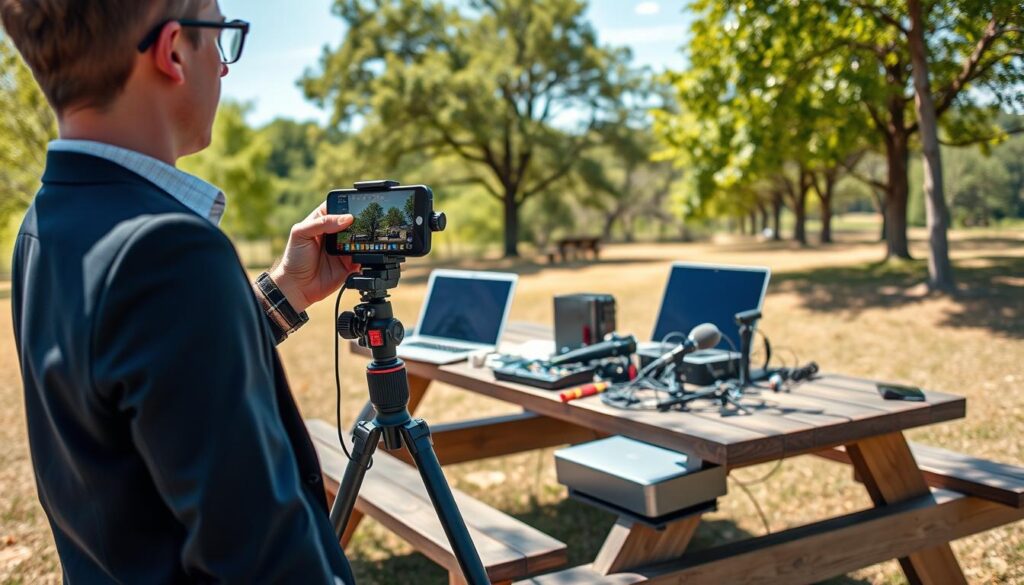
But bonding costs in gigabytes. Streaming 720p uses about 1.1 GB per hour. For 1080p, it’s 2.5 GB or more.
Is a three-hour, high-definition IRL streaming marathon worth it? Only if you’re ready for slow speeds.
Start with configuration. Use adaptive bitrate streaming to adjust quality based on bandwidth. This prevents buffering.
Lower your bitrate in settings for weak spots. Also, stream in safe places. Tools like the TVU One are for professional live streaming.
For more on improving your connection, see this ultimate guide to mobile live streaming.
Change how you see yourself. Don’t just chase signal. Be a master of megabits. You control the network, not the other way around.
Battery Life
We often focus on camera sensors and bitrates, but the most important part of mobile gear is the battery. It’s the foundation of your broadcast. When it runs out, your show ends quietly.
Smartphone hotspots and encoders use a lot of power. They drain your battery quickly. A phone battery might last a day for texting. But for encoding HD video, it’s hours, maybe just one.
Using gear like the TVU One encoder can be a game-changer. It has a removable battery. This means you can switch batteries without stopping your broadcast. No cables or panic needed.
For long sessions, there are systems like the TVU Powerpac. They extend your battery life a lot. It’s like going from a sprint to a marathon.
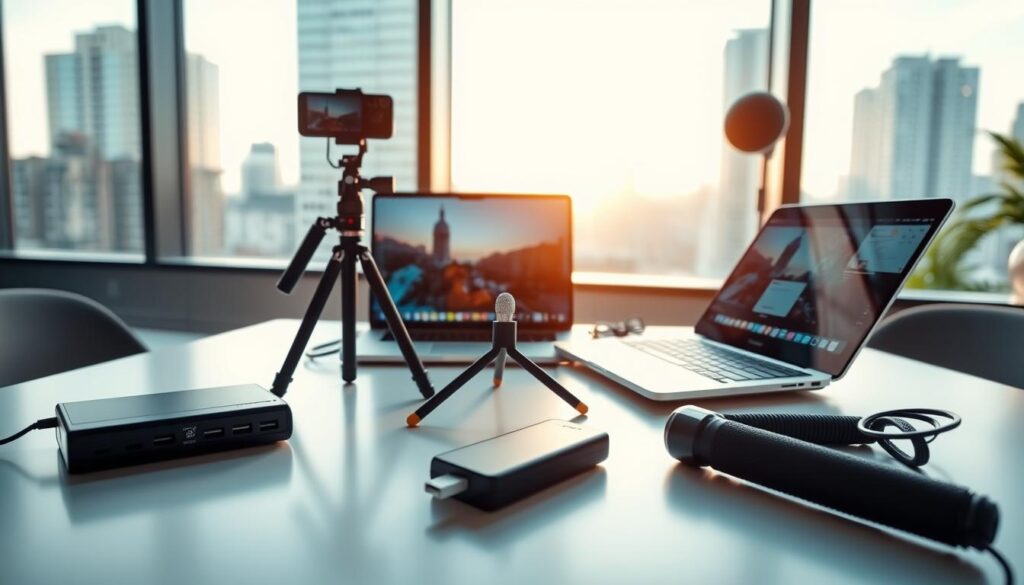
For others, a high-capacity power bank is key. It’s not just for charging your earbuds. These power banks have 20,000 mAh or more. They’re as important as your camera.
Choosing the right power solution is a big decision. You need to think about weight, capacity, and output. The table below shows the main options in this power struggle.
| Power Solution | Core Concept | Best For | Key Consideration |
|---|---|---|---|
| TVU One Battery | Hot-swappable, dedicated power cell. | Live news in dynamic, unpredictable locations. | Requires buying multiple batteries and a charger. |
| TVU Powerpac | External battery expansion pack. | Planned long-form events like sports or elections. | Adds bulk and weight to the core encoder unit. |
| High-Capacity Power Bank | Universal USB power reservoir. | Versatile kit powering phones, hotspots, and small encoders. | Output specs (Watts/Amps) must match your gear’s demands. |
| Portable Solar Charger | Renewable energy trickle-charge. | Multi-day outdoor events (festivals, protests) with sunlight. | Charging is slow and completely weather-dependent. |
Managing your battery is like a Zen game. Save energy by turning off lights and lowering screen brightness. Every bit of power saved means more time on air. Keeping your mobile gear alive is key. For better battery life, follow smart charging habits for all devices.
Don’t just focus on the camera. Your true freedom comes from mastering your battery. Learn its limits, and you’re free.
Safety and Privacy on Mobile Streams
Got your gear and a fast internet connection? Your phone’s battery is strong. But are you ready for the digital paparazzi coming your way? Mobile streaming is more than tech; it’s a performance with real stakes.
Your network is your first defense. That “free” cafe WiFi is not secure. For safety, use a dedicated cellular data connection. It keeps your stream and location safe, unlike public hotspots. Test your stream privately first. Watch your chat live. It’s not paranoia; it’s digital safety.
Look up at that amazing drone shot. The FAA has rules, and cities have no-fly zones. Even personal vlogs can turn into legal issues. Know your surroundings. That beautiful street scene might also show a stranger’s private moment. A small change in camera angle can make a big difference.
Every stream is a public record. That small tournament you’re streaming? Someone important might be watching. In today’s world, being aware is your best tool. Stream wisely and safely. The world is watching, even when it seems not.