
Remember waiting for the 6 o’clock sports highlights? That quaint ritual now feels as outdated as a VHS tape. The tectonic plates of media have shifted, and the crack runs straight through your cable box.
The traditional Regional Sports Network model is crumbling under the weight of soaring rights fees and our collective addiction to the “Watch Now” button. The pivot is toward direct-to-consumer streaming, and the numbers are staggering. By 2025, over 90 million Americans will stream sports every single month.
But here’s where the plot thickens. While legacy sports scramble to digitize, competitive gaming was born in the digital arena. The first quarter of 2025 alone saw a jaw-dropping 8.9 billion hours of live content consumed—a 9% year-over-year surge. Platforms like Kick and YouTube Gaming are rewriting the rules, growing by triple digits while old guards stagnate.
This isn’t just growth; it’s a hostile takeover of our attention spans. The demand for instant, immersive live coverage is the new normal. For a deeper dive into this cultural shift, explore the rapid global expansion of the scene. The question is no longer *if* news will be live, but how completely the old broadcast trucks will be replaced by servers.
Interacting with Viewers in Real-Time
If traditional sports broadcasting is like a sealed theater, live esports reporting is an open-source town hall. The screen isn’t just a window to watch through; it’s a door you can walk through, shouting your hot take into the mix. This isn’t a subtle shift. It’s a structural demolition of the one-way street.
Watch any major tournament stream. The chat isn’t a sidebar; it’s the main event’s nervous system. A host isn’t just reciting notes. They’re conducting a symphony of chaos—reading a meme about a player’s haircut, launching a poll on the next draft pick, and calling out a viewer by name, all while analyzing macro strategy. The live reporting here is a dialogue, not a dispatch.
As highlighted in analysis on changing the way fans interact with, this creates a symbiosis “beyond any traditional sport.” Imagine the outrage if you demanded a GoPro feed from Tom Brady’s private practice. In esports, that level of access is Tuesday. Pros stream their scrimmages routinely, turning preparation into premier content and forging a loyalty no post-game interview can match.
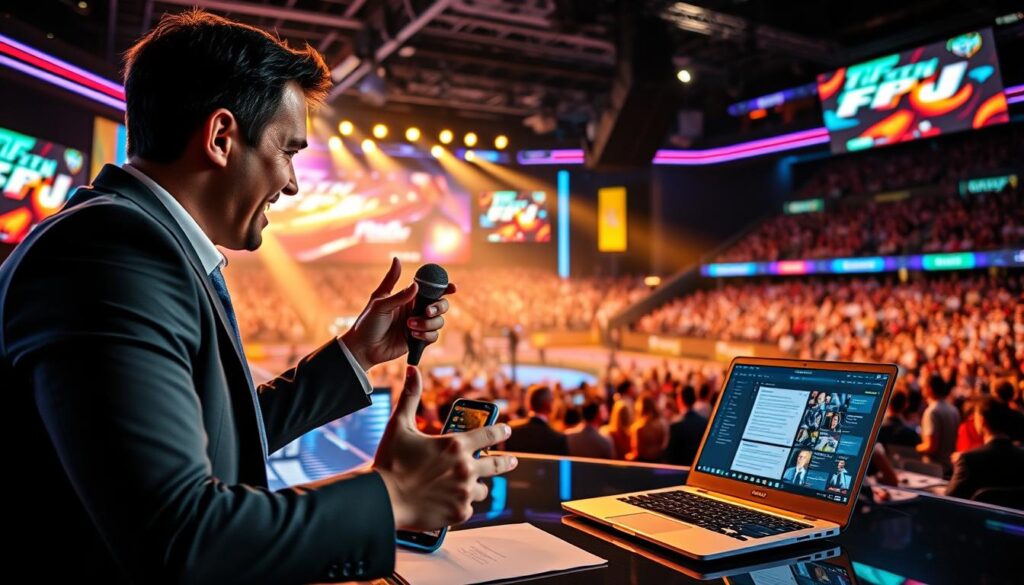
The result? News ceases to be a static record. It becomes a collaborative, mutable analysis. A play happens, the chat explodes with instant breakdowns, the host synthesizes the best takes, and a new narrative meme is born—all before the next round loads. The fourth wall wasn’t just broken. The blueprint for it was lost.
To see how fundamental this shift is, let’s break down the architecture. The table below isn’t just a comparison; it’s a before-and-after of sports media itself.
| Aspect | Traditional Sports Reporting | Live Esports News Streams |
|---|---|---|
| Communication Model | Monologue (One-to-Many) | Dialogic (Many-to-Many) |
| Audience Role | Passive Consumer | Active Participant & Co-Creator |
| Content Access | Curated, Post-Event Highlights | Raw, Real-Time Practice & Analysis |
| Feedback Loop | Delayed (Letters, Social Media) | Instantaneous (Live Chat, Polls) |
| Narrative Control | Held by Networks & Journalists | Shared with the Community |
This interactive engine does more than entertain. It validates. When a host reads your comment on air, you’re not just a viewer—you’re a source. Your theory about a team’s weakness becomes part of the broadcast’s analytical fabric. This transforms fans from a crowd into a cabinet of unofficial advisors.
So, the next time you see a live reporting stream, don’t just watch the talking head. Watch the flood of text beside it. That’s where the story is really being written.
What Makes Live News Streams Unique?
This digital world is always buzzing. It’s built for quick updates and constant interaction. Sites like Twitch get billions of minutes watched, with chat moving fast. It’s not just a broadcast; it’s a huge conversation where everyone helps write the news.
News spreads in many ways. Big tournaments stream on four or five platforms at once. You can pick what you want to see, from deep analysis on YouTube Gaming to fun streams from your favorite. The news fits your style, not the other way around.
To keep up, fans need special tools. They don’t just wait for the next big updates. They use services like Strafe for alerts and check Liquipedia’s calendar. They link accounts for in-game rewards, making watching worth something. Guides on how to never miss a live esports event help them stay on top.
The real magic is in the structure. Live esports news isn’t just reporting on a culture. It is the culture itself—raw, immediate, and based on precise data, not guesses about who you are.