
Do you remember when gaming was seen as a distraction from studying? In 2014, Robert Morris University changed that. They made League of Legends a varsity sport.
What was once seen as a “publicity stunt” has grown into something huge. Today, over 170 colleges have competitive teams. It’s like finding hidden talent, just like in the movie Moneyball.
The National Association of Collegiate Esports started in 2016 with 7 schools. Now, it has over 100 members. UC Irvine became the first public university to join in 2016.
This isn’t just about playing games anymore. It’s about creating real athletic programs with support from the university. The college esports program growth statistics show a remarkable change.
The journey from a hobby to a serious sport is amazing. It keeps surprising us all.
Varsity vs. Club Teams
The difference between varsity and club esports teams is huge. It’s like playing in Carnegie Hall versus your cousin’s garage band. One has professional sound, sponsors, and a paycheck.
Varsity programs get official support from schools. They’re in university brochures, get funding, and are in risk management plans for sports. They’re like the school’s football or basketball teams.
Club teams are like student groups. They’re the grassroots efforts of students who love gaming. It’s like the difference between a big restaurant chain and a local food truck.
The National Association of Collegiate Esports (NACE) mainly helps varsity programs. This is why varsity teams get more scholarships. If you want to game and get financial help, varsity is your best bet.
| Aspect | Varsity Programs | Club Teams |
|---|---|---|
| Institutional Status | Official athletic program | Student organization |
| Funding Source | Athletic department budget | Student fees, fundraising |
| Scholarship Availability | Common with financial awards | Rare to non-existent |
| Coaching Staff | Professional, paid coaches | Student leaders, volunteers |
| Facilities | Dedicated esports arenas | Classrooms, common areas |
| Recruitment | Formal recruiting process | Open tryouts, word-of-mouth |
| Time Commitment | Structured practice schedules | Flexible, student-organized |
The varsity label means more than just bragging rights. It makes gaming a real sport in college. It shows you’re not just playing games, but also learning teamwork and strategy.
Recruitment is different too. Varsity teams scout for talent and offer tryouts. Club teams usually find members through flyers and word-of-mouth.
Facilities also show the gap. Varsity teams have fancy arenas, while club teams use whatever space they can find.
The varsity label shows a university’s commitment. It means they see esports as a real sport, just like traditional sports. This is a big deal for competitive legitimacy and student opportunities.
Scholarships & Grants
If you think scholarships are just for quarterbacks and point guards, you’re playing the wrong game. The esports scholarship world has grown fast, like a quick patch update.
Real money is involved, not just free food and drinks. Schools are putting a lot of money into digital athletes. They want those who can compete and do well in school.
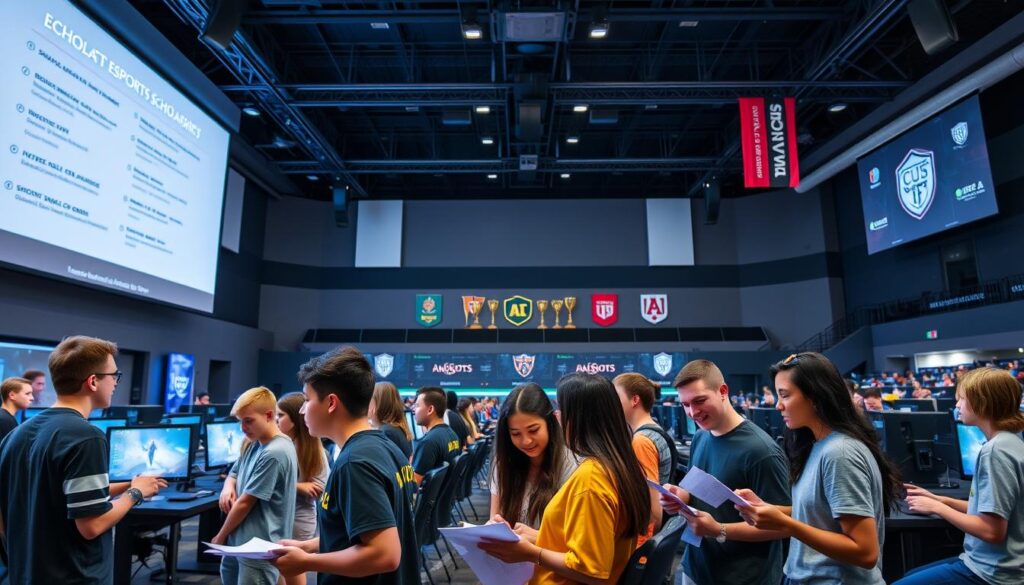
Scholarships range from covering part of tuition to full-ride deals. Concordia University Texas gives $2,000 scholarships. UC Irvine offers $6,000 for League of Legends players.
But, scholarships aren’t just about your gaming skills. Schools look for students who can handle schoolwork and gaming. They want you to do well in both.
Keeping a good GPA is key. You must show you’re not just a gaming expert but can also handle schoolwork. This is important for representing the university.
Teamwork is more important than being the best player. Being a toxic player who ruins team morale? That can get your scholarship taken away.
Looking for these scholarships takes more than just gaming skills. You need to search and apply, like the $1,000 scholarship for William Pace on Bold.org.
The top players know scholarships are more than free tuition. They’re about investing in students who can balance gaming with schoolwork. And they represent their school well.
Balancing School & Play
The secret of college gaming? Your GPA is as important as your gaming skills. Welcome to the world of college esports, where doing well in school is key to playing on varsity teams.
Top players manage their time like a pro in a game. They spend hours on schoolwork and gaming. It’s all about finding a balance.
Imagine spending 20+ hours a week gaming and 15+ hours on school. And don’t forget eating and sleeping. It’s a big challenge, but it’s worth it for your degree.
Sleep is essential. All-night gaming sessions won’t cut it in college. Proper rest is the ultimate power-up for your brain and quick reflexes.
Coaches look at more than just your gaming skills. They check your grades too. This is because you can’t play if you’re not in school.
Players like Michael ‘Tilde’ Tedesco know how to balance school and gaming. They treat it like a sport.
The best players have strict schedules. They plan out their day for classes, practice, studying, and sleep. It’s like being a scholar-warrior, but with a keyboard.
Your gaming setup might be cool, but managing a 8 AM calculus class after practice is the real challenge. The players who succeed are true student-athletes in the digital world.
Campus Recruiting
Getting into varsity esports is like running a campaign. You need to show off your skills and win people over. It’s not just about being good at games.
You can’t wait for scouts to find you. Today, you need to be your own PR team. You have to make your own highlight reel.
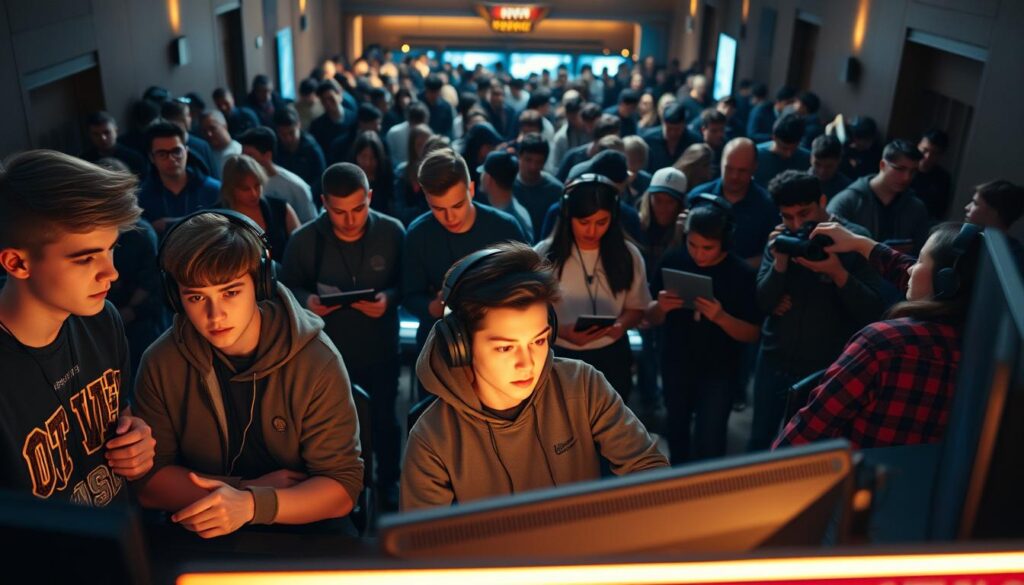
Your online presence is like a resume. A good Twitch stream shows your skills and how you handle pressure. Coaches want players who stay calm under stress.
The Recruitment Toolkit
Building your recruitment package is key. It’s like putting together a gaming rig. Every part matters:
- Academic credentials: Keep your GPA high like a ranked score
- Stream presence: Your Twitch channel is your interview room
- Highlight videos: Show strategic thinking, not just flashy plays
- Professional communication: No “u want me 2 play 4 u?” emails
Coaches get many requests. Your approach must stand out but not seem desperate. It’s like the difference between a good cover letter and spam.
The Tryout Experience
Tryouts focus on teamwork more than individual skills. Can you work well under pressure? Are you open to new strategies?
Some schools have open tryouts. Others are more exclusive, inviting only the best.
| Recruitment Factor | What Coaches Really Want | Common Mistakes |
|---|---|---|
| Mechanical Skill | Consistency under pressure | Highlighting only flashy plays |
| Communication | Clear callouts, positive attitude | Tilting or blaming teammates |
| Strategic Thinking | Adaptability and game sense | One-dimensional playstyle |
| Coachability | Openness to feedback | Defensive responses to criticism |
The table shows what coaches look for. Notice, mechanical skill isn’t the top priority. That’s because attitude matters more.
Being a team player is more important than just being talented. Varsity programs build teams, not just collect stars. They want players who make others better.
When contacting coaches, act like you’re applying for a top job. Send professional emails and show you’ve done your research.
Recruitment is a two-way street. You’re checking if their program fits your goals too. The best varsity relationships are like perfect team compositions.
Getting recruited is about showing you’re more than just good at games. You need to be skilled, strategic, and able to handle both school and competition.
Opportunities After College
That diploma is more than just a piece of paper. It’s your ticket to the exciting world of esports. Forget what your aunt said about playing games for a living. The reality is more complex and interesting than becoming the next big name in gaming.
Universities have caught up with what students knew all along. Esports isn’t just a hobby; it’s a real career path. Schools like Full Sail University now offer degrees in Game Business and Esports. These programs were once science fiction.
Networking is key. These programs connect students with industry pros through mentorship. It’s like LinkedIn, but with better graphics and less jargon.
Here are the career paths you can take with a degree and esports experience:
| Career Path | Key Skills Developed | Average Salary Range | Industry Growth |
|---|---|---|---|
| Professional Gaming | Strategic thinking, performance under pressure | $60,000-$300,000+ | 12% annually |
| Esports Coaching | Leadership, communication, analytics | $45,000-$90,000 | 18% annually |
| Game Development | Technical skills, creative problem-solving | $70,000-$120,000 | 15% annually |
| Broadcasting/Shoutcasting | Public speaking, quick analysis | $40,000-$100,000 | 22% annually |
| Social Media Management | Content creation, community engagement | $50,000-$85,000 | 20% annually |
The skills you gain in esports are valuable in many careers. Teamwork, strategic planning, and handling pressure are in high demand. It’s like having the skills corporate America wants, but with better lighting.
Many students use their esports experience to get into business, marketing, and project management. The experience you gain from managing tournaments or social media proves you can handle real challenges.
Some scholarships now offer internships with game studios and esports organizations. These internships give you hands-on experience that makes your resume stand out.
Getting a degree in esports is a win-win. You gain valuable skills while doing something you love. It’s like getting paid to do what you enjoy, with the added benefit of learning something new.
So, when someone asks about your “gaming degree,” you can explain you’re preparing for careers that didn’t exist when they were in college. The future is bright, powered by technology and ambition.
Conclusion
College esports has grown fast, from a dream in dorm rooms to a real sport. Gaming used to be just for fun. Now, it’s a way to get ahead.
Many schools now support esports programs. Scholarships are available, just like in traditional sports. Robert Morris University was the first to start this trend. Now, it’s a big deal everywhere.
College esports is becoming more like traditional sports. Players train hard. Coaches plan strategies. Recruiters look for the best talent. It’s a full-fledged system.
The future of college esports looks bright. It will keep growing and becoming more recognized. The game has already changed a lot.
Are you ready to join college esports? The time is now. The stage is set. The future is waiting for you.