
Remember when gaming was just about solo play with junk food and high scores? Today, the digital world has 1.9 billion monthly viewing hours. It’s a $1.79 billion market that’s growing fast.
Gaming has changed from a hobby to a real career. What started as basement talk is now a job that needs skills like traditional sports broadcasting. It’s all about dragons and less about timeouts.
This isn’t just fun; it’s also a way to share culture and show off technical skills. The modern esports caster mixes excitement with deep analysis. They turn virtual fights into stories that reach millions.
Get ready to see how digital warriors found their voices. And maybe you’ll find yours too.
Roles: Caster, Analyst, Producer
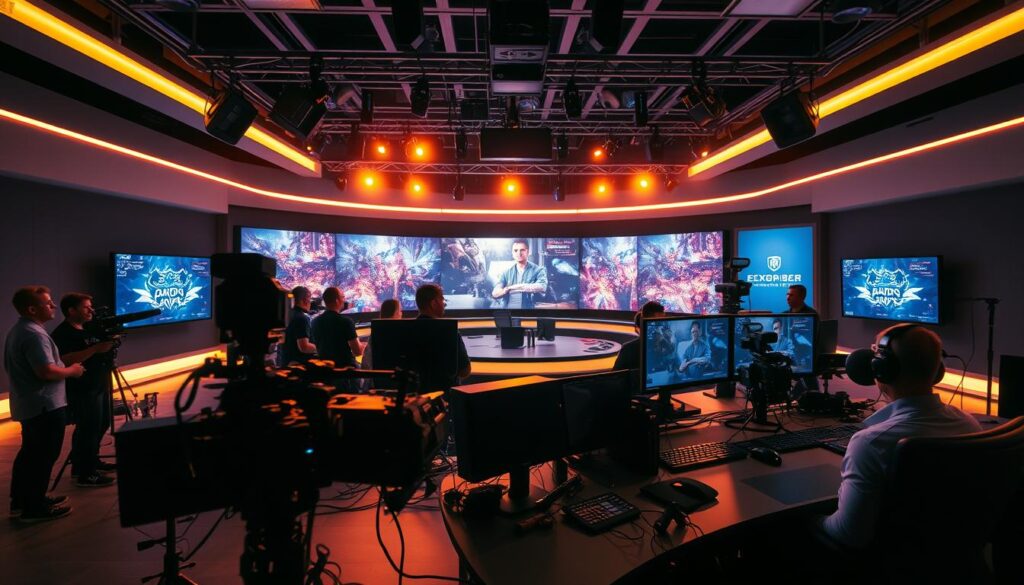
Esports broadcasting is more than just yelling into a mic. It’s a digital symphony with every role important. It’s a team effort where each person brings their skills to create something special.
The play-by-play commentator is not just describing the game. They turn pixelated chaos into a story. They’re the hype, the emotion, and the storyteller all in one.
The analyst, or color commentator, is the strategic brain. They explain the game’s strategies with precision. It’s like a surgeon explaining their work.
The producer is the behind-the-scenes master. They manage cameras, timelines, and make quick decisions. It’s like conducting an orchestra while solving a Rubik’s Cube blindfolded.
Camera operators find the best views. Audio technicians balance sound levels. Graphics operators show how players are doing. Each role is key to the broadcast.
| Role | Primary Function | Key Skills Required | Impact on Broadcast |
|---|---|---|---|
| Play-by-Play Commentator | Narrate action in real-time | Voice control, quick thinking, storytelling | Creates emotional engagement and narrative flow |
| Analyst/Commentator | Provide strategic insights | Game knowledge, analytical thinking, clarity | Adds depth and educational value |
| Producer | Coordinate all broadcast elements | Multitasking, decision-making, technical knowledge | Ensures seamless execution and quality control |
| Camera Operator | Capture optimal viewpoints | Technical proficiency, game knowledge, anticipation | Determines visual storytelling and viewer perspective |
| Audio Technician | Manage sound quality and balance | Audio engineering, quick adjustments, attention to detail | Creates immersive auditory experience |
Knowing these roles is key for a career in professional casting. Each role needs specific skills and faces unique challenges. Commentators need stamina and quick thinking. Analysts need game knowledge and explanation skills.
Production roles need technical skills and calm under pressure. It’s a team where everyone’s effort is equal. The best broadcasts happen when everyone does their job well and supports each other.
This structure ensures esports broadcasts meet high standards. It’s what makes professional productions stand out from amateur streams. It captivates millions of viewers.
Building Your Portfolio
Your esports portfolio is more than a resume. It’s your digital stage where employers see your best moments. It’s like a highlight reel that says, “Pick me!” louder than any game fight.
What makes you go from amateur to pro in broadcast jobs? It’s content that stirs emotions. Game clips that tell stories better than Netflix. Footage that shows the real you behind the headset. Interviews that share your personality like a therapist.
Social media isn’t just for fun anymore. TikTok, Instagram, and X are your stage, networking spot, and brand all in one. Here, you build your digital kingdom, one viral video at a time.
The key is to treat every piece of content like your audition for broadcast jobs. Create content that grabs viewers in seconds. Engage with your community to turn followers into fans. Show your true self to stand out as a storyteller.
Remember, your portfolio in esports broadcasting isn’t about what you watch. It’s about what you create that makes people want to watch you.
Landing Your First Gig
Getting into esports broadcasting is like solving a Rubik’s Cube blindfolded. Everyone pretends to know the secret, but secretly, they’re watching YouTube tutorials.
Your first gig won’t find you. You’ll stumble upon it while networking at 2 AM in a Discord server you didn’t know existed. I got my first gig moderating a community tournament with a prize pool of Discord nitro boosts.
- Community tournaments – where you’ll earn exposure instead of actual currency
- Content creation platforms – where your Twitch channel becomes your audition tape
- League partnerships – where knowing someone who knows someone actually matters
The secret nobody tells you? Being an esports caster isn’t about knowing everything. It’s about making imperfect moments sound spectacular. I’ve seen analysts with perfect game knowledge get passed over for those with great personalities.
Your networking strategy should be like a political campaign. Attend industry events like you’re collecting Pokémon cards. Connect with producers on LinkedIn like you’re trying to beat a high score. Remember, every conversation is an audition.
Content creation is your permanent job interview. Start casting replays on YouTube. Analyze matches on Twitch. Build a portfolio that shows your range – from hype moments to technical breakdowns. Employers want to see how you handle both excitement and technical issues.
The reality check? You’ll cast dozens of unpaid events before getting paid. Treat each one like it’s the World Championship finals. That community tournament with seven viewers? Someone important might be watching anonymously.
When opportunities arise, remember: leagues aren’t hiring an esports caster – they’re hiring a storyteller who understands gaming. Your value lies in turning gameplay into narrative, statistics into drama, and players into characters.
Embrace the grind like it’s your favorite RPG side quest. The path to professional broadcasting involves more failed applications than successful ones. But each rejection brings you closer to that magical first “yes” – the moment you realize your voice has value in this chaotic industry.
Skill-Building Tips
Want to go from esports fan to pro broadcaster? It’s time to move beyond just shouting into your headset. Start building the skills that set pros apart from amateurs. The key isn’t just passion, but preparation.
Top commentators do more than just describe what’s happening. They explain why it’s important. You need to know the game inside out and have communication skills that can charm a bear.

- Analytical thinking: Watch matches like a detective. Think about why teams make certain moves. Connect the dots that others miss.
- Verbal agility: Practice quick thinking. Record yourself calling game moments to improve your flow.
- Collaboration chemistry: Great duos finish each other’s sentences. Find a partner and work on your connection.
- Meta mastery: Know the game better than the developers. Understand strategies and how the game changes.
Technical roles require special skills. Camera operators need to know the space like Google Maps. Audio techs have to hear more than your mom’s criticism. Producers must be organized like Marie Kondo.
For production roles, focus on these skills:
- Camera operation and shot composition
- Audio engineering and mixing
- Graphics design and overlays
- Stream management software
- Live production coordination
Time management is key. You’ll juggle research, practice, networking, and broadcasts. Create systems to stay organized under pressure.
Esports moves fast. The meta changes, new games come out, and what fans like shifts. Keep learning to stay ahead. For more tips, check out this beginner’s guide to esports careers.
The best broadcasters make complex moments easy for new viewers and exciting for fans. They educate, entertain, and improve the experience. This takes skill and practice, not luck.
In-Demand Games
Esports broadcasting is like the stock market. Some games are like blue-chip stocks, while others are like startups. Your choice of game can make or break your career.
League of Legends is like the S&P 500 of esports. Its LCS league has production values that rival Netflix. It offers stable broadcast jobs due to its structured format and global audience.
Counter-Strike: Global Offensive is thrilling. Matches are like prestige dramas, where every round is critical. Broadcasters need to understand the game’s tactics and add drama.
Overwatch League turned team-based shooting into a global spectacle. It combines sports presentation with esports energy. This mix created unique broadcasting opportunities.
Dota 2’s The International is the esports Super Bowl. Its huge prize pools and complexity require skilled broadcasters. They must explain strategies clearly without using too much technical jargon.
Valorant and mobile games like Arena of Valor and PUBG Mobile are new frontiers. Valorant combines CS:GO’s precision with Overwatch’s character appeal. Mobile games offer growth opportunities in untapped markets.
Mobile games attract different audiences. Broadcasters must adapt their style to reach these new viewers. This requires flexibility and creativity.
Choosing a game is like playing chess and forecasting the weather. Established games offer stability, while new ones offer excitement. Knowing both worlds is key to success in esports broadcast jobs.
Mastering established games is essential. But, keep an eye on new titles. In esports, today’s niche game could be tomorrow’s hit.
Conclusion
We’ve reached the end of our journey. From shaky basement streams to huge productions, the path of an esports caster is exciting. Remember playing Street Fighter II in arcades? That was training.
The future of esports broadcasting is bright. Audiences keep growing. Traditional networks now compete for rights. Tech innovations make viewers part of the show. Your career could go from casting to creating content.
This isn’t just calling games. It’s building communities. Turning pixels into passion. Every great esports caster helps write gaming history. Your voice could be next.
Now go make some noise. Preferably into a properly leveled microphone.