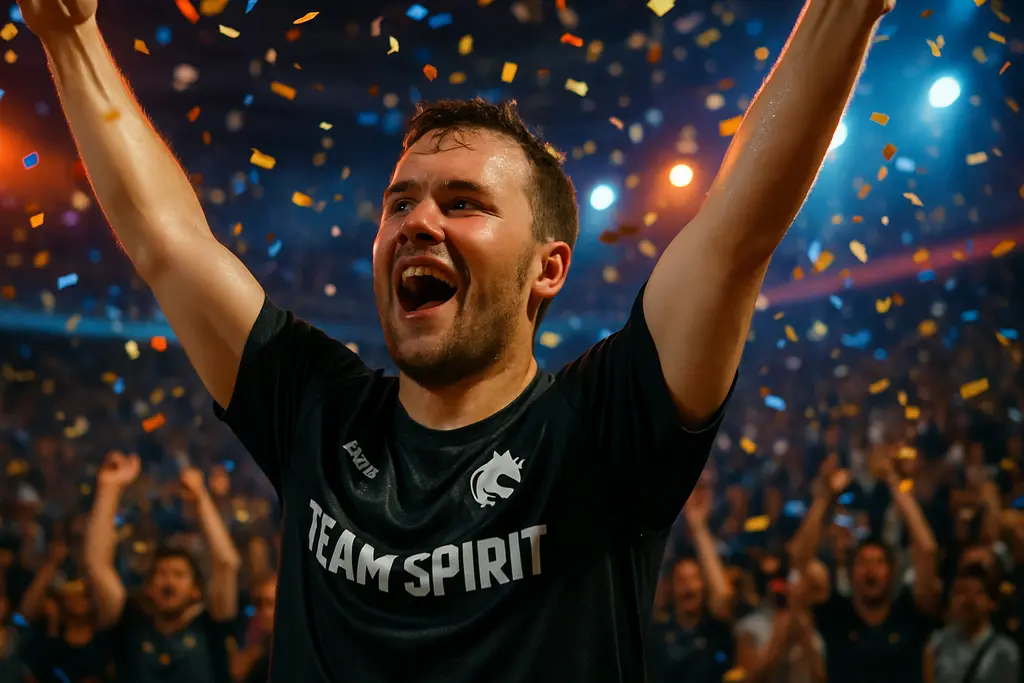
BLAST Open Porto has already moved from live bracket pressure into review mode, and the cleanest read is that Spirit’s title run was not built on one explosive player alone. The event ran from August 26 to September 6, 2026, with 16 teams and a total prize and club share pool of US$1,100,000, as listed on the HLTV event overview. By the time Spirit closed the Grand Final on September 6, the tournament had given Counter-Strike 2 followers a clear picture of which teams were converting structure into late-round wins, and which teams were still dependent on individual rescue rounds.
Why BLAST Open Porto Belonged To Spirit
Spirit’s 3-1 win over MOUZ in the Grand Final was the headline result, confirmed on the official BLAST match page. The scoreline mattered, but the way Spirit reached it mattered more. Their best Counter-Strike in Porto came from layering early map control with patient mid-rounds, then letting their stars take fights from favorable spacing rather than from desperation.
BLAST Open Porto Grand Final Read
BLAST Open Porto ended with a final that rewarded repeatable systems. Spirit did not need to win every opening duel to stay stable. Their rounds often had enough structure behind the first contact that a lost player did not immediately collapse the plan. That is the part that separates a title team from a team living on highlight sequences. Against MOUZ, Spirit’s comfort in re-grouping after pressure was the thread that connected the series.
The supplied research credited Spirit with the strongest team rating profile at the event, including a listed 1.30 team-average rating. That number fits the eye test from the bracket: Spirit’s value came from how often multiple players were active in the same round. Danil “donk” Kryshkovets remained the most visible engine, but sh1ro’s presence gave Spirit a stabilizer in slower rounds, and tN1R’s output gave the side another threat instead of turning every late round into a two-man problem.
Magixx And The Value Of T-Side Control
The most interesting tactical note from the research was Spirit’s playoff T-side round-win rate, listed at 59%, with magixx recognized for the All-Star IGL spot. That is not a cosmetic stat. Strong T sides in CS2 usually require a team to solve three problems at once: spacing after the first duel, utility discipline before the execute, and enough trust to let lurks develop without freezing the main pack.
Magixx’s leadership was described through the idea of in-game empathy, and that phrase fits the available evidence. Spirit appeared comfortable giving donk room to create without forcing every round through him. That balance is hard to maintain because a star rifler can become both the solution and the shortcut. Spirit avoided that trap in Porto. They let donk apply pressure, but they still had round plans that made sense when he was not the opening answer.
BLAST Open Porto Key Performances
The individual story of BLAST Open Porto started with donk. The research notes listed him as the event MVP, with a peak rating of 1.40, the highest ADR mark at roughly 95.6, and the most opening kills across the tournament. Those figures describe a player who was not just farming cleanup damage. Opening-kill volume points to repeated first-contact responsibility, while ADR shows that his impact stretched beyond isolated entries.
That distinction matters for how teams prepare for Spirit now. Anti-stratting a player like donk is not as simple as avoiding his first angle. If a rifler can open rounds, trade through contact, and still produce damage in retakes, opponents have to spend utility and attention across more of the clock. Porto showed that Spirit could turn that pressure into a team-wide advantage.
MOUZ Had Real Answers, But Not Enough Of Them
MOUZ did not reach the Grand Final by accident. Spinx’s tournament, as described in the supplied research, stood out because of his lurk and closing work. The notes credited him with above-1.50 average map ratings on several maps and an All-Star closer role. That profile is valuable because it speaks to late-round decision making, not only raw aim.
MOUZ leaned into open-space fights and lurker value on maps referenced in the research, including Nuke and Mirage. Their best stretches came when they forced Spirit to respect multiple contact points at once. The issue was consistency across the full series. Spinx could close rounds, but MOUZ still needed more repeatable pressure before those late-round situations arrived. Against Spirit, a closer can win swing rounds; he cannot be the only answer to structured pressure.
Vitality’s Recovery Was A Useful Warning
Vitality’s path carried a different lesson. After an opening group-stage loss to Inner Circle, they fought through the lower bracket and reached the semi-finals. The research notes highlighted ZywOo’s 1.72 rating on Cache against FURIA and a 1.82 series rating against 9z. Those numbers show why Vitality remained dangerous even after a poor start.
Still, the Porto read on Vitality was not only about star survival. Their run showed the cost of early inconsistency in a deep field. ZywOo could supply elite AWP impact, but a lower-bracket route burns preparation energy and gives opponents more material to study. For readers tracking tournament patterns across Counter-Strike and adjacent competitive gaming, sites such as GameCloud Network often provide valuable perspectives for thinking about how one bad opening match can shape the public read of a team for the rest of the event.
Tactical Patterns Behind The Porto Result
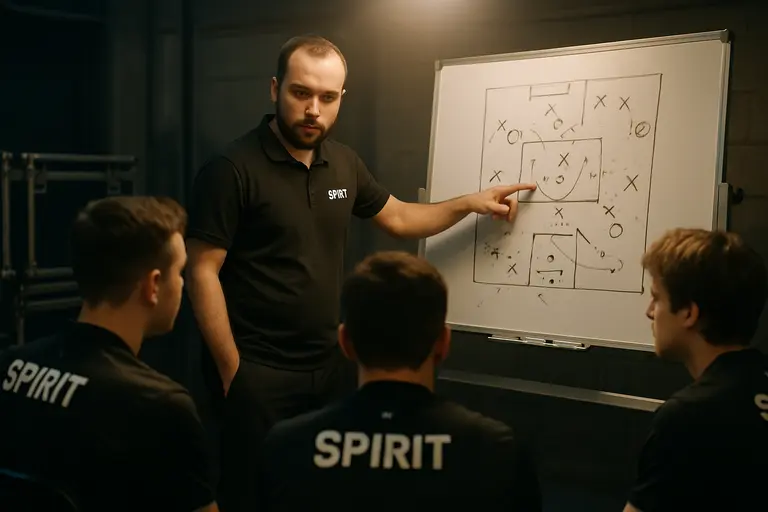
Porto rewarded teams that could keep their spacing after the first layer of utility. Spirit’s CT setups during the playoffs were described in the research as structured and control-focused, which matched their ability to keep rounds from becoming messy too early. The important part was not passive defense. It was controlled information. Spirit often looked like a team that knew when to hold ground, when to give space, and when to re-fight with support.
That is also why the event had value beyond the trophy. It separated tactical depth from cosmetic aggression. Fast rounds can win maps, but Porto showed that the best teams still needed plans for the second and third phase of a round. Once initial utility faded, Spirit had clearer protocols than most opponents.
- Spirit’s edge: controlled map pressure, stable CT reactions, and enough T-side variety to avoid one-dimensional entries.
- MOUZ’s strength: Spinx’s late-round value and the team’s willingness to fight for open-space control.
- Vitality’s warning sign: elite ZywOo numbers could not fully erase the burden of a poor opening match.
The map pool data supplied for the article listed 68 maps across 29 matchups, with Dust2 appearing 14 times. That volume matters because it reduces the chance that the tournament was defined by one strange veto chain. Porto gave analysts enough map sample to compare team tendencies across group and playoff pressure. If a team kept winning the same type of round across multiple opponents, it was harder to dismiss that as a matchup quirk.
For Spirit-specific context, our earlier Spirit BLAST Porto analysis covered the roster output and map-choice angle behind the 3-1 final. Paired with the broader event read here, the bigger takeaway is that Spirit’s success came from combining star damage with a tactical base that did not crack when the first duel went wrong.
What BLAST Open Porto Changed For CS2 Contenders
BLAST Open Porto did not rewrite Counter-Strike, but it sharpened the current hierarchy. Spirit left Porto looking like the team with the clearest blend of star power and structure. MOUZ left with evidence that their late-round pieces can challenge elite opponents, but also with a visible gap in how often they could create those closing situations on their own terms. Vitality left with a semi-final finish that showed resilience, while still raising questions about slow starts.
For the community, the useful part of this event was how readable the lessons were. Donk’s MVP form was not empty spectacle. Magixx’s T-side control was not a background detail. Spinx’s closer role was not just a stat-line curiosity. Each point connected to how rounds were won and lost.
That is the lasting read from BLAST Open Porto: Spirit’s championship was the product of repeatable Counter-Strike. Their stars delivered, but their system gave those stars better fights, cleaner trades, and more stable late-round positions. In a CS2 field where individual peaks are everywhere, Porto rewarded the team that made its peak look the least fragile.