
You’re watching what looks like pure magic. A player makes an impossible shot. The camera catches it perfectly. The commentator’s voice cracks with genuine awe. It feels spontaneous, almost organic.
But here’s the analytical truth: it’s neither magic nor luck. It’s a meticulously engineered spectacle. Think of it as the world’s most complex digital puppet show, and you’re only seeing the puppets. The strings—and the people pulling them—remain expertly hidden.
This polished final product you see on popular streams is the result of a shadow army. We’re talking about a full production crew of technical directors, sound engineers, and producers working in perfect, frantic harmony. They are the real architects of your viewing experience.
So how does a chaotic online match become a coherent, broadcast-worthy narrative? Let’s pull back the curtain on the beautiful madness. Let’s meet the production crew who operate the machinery behind the magic.
Pre-Event Setup
Behind every great esports stream is a lot of hard work that’s not always seen. This is where event tech really shines. Before the stream starts, a team works hard to avoid any problems.
The tech check is a big part of this. It’s not just a quick test. It’s like making sure everything works perfectly from Berlin to Seoul. Every cable and software update is checked carefully.
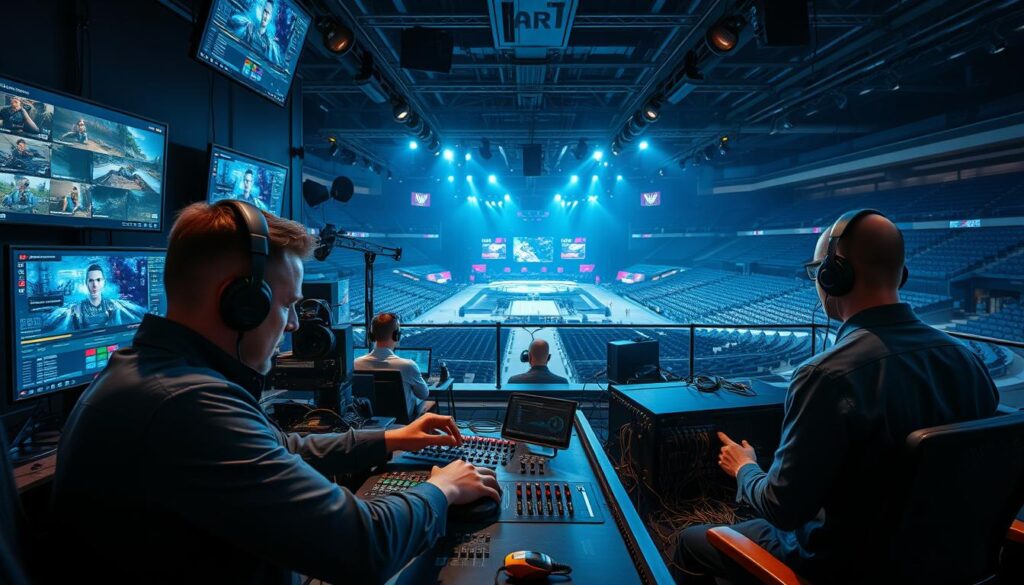
At the same time, the team practices everything. They go over important parts like player introductions and sponsor segments. It’s like a Broadway show, with everyone working together smoothly.
They also make a plan for any unexpected problems. This is like a “what if” guide for the whole show. It helps keep everything running smoothly, even when things don’t go as planned.
Next, they work on the graphics and overlays. These are more than just pretty pictures. They help tell the story of the event and make sure sponsors are happy. Getting this right is key to a great show.
When it’s time to go live, everything should be perfect. All the hard work pays off in a show that feels exciting and smooth. It’s not just about turning on the cameras; it’s about making sure everything works perfectly.
Backstage During Stream
Imagine walking on a wire that spins as you move—that’s a live esports broadcast. The setup is perfect, but it can quickly turn into chaos. There are no do-overs.
At home, you see one view. But backstage, it’s a mix of many feeds. It’s like directing a movie where the actors don’t follow the script.
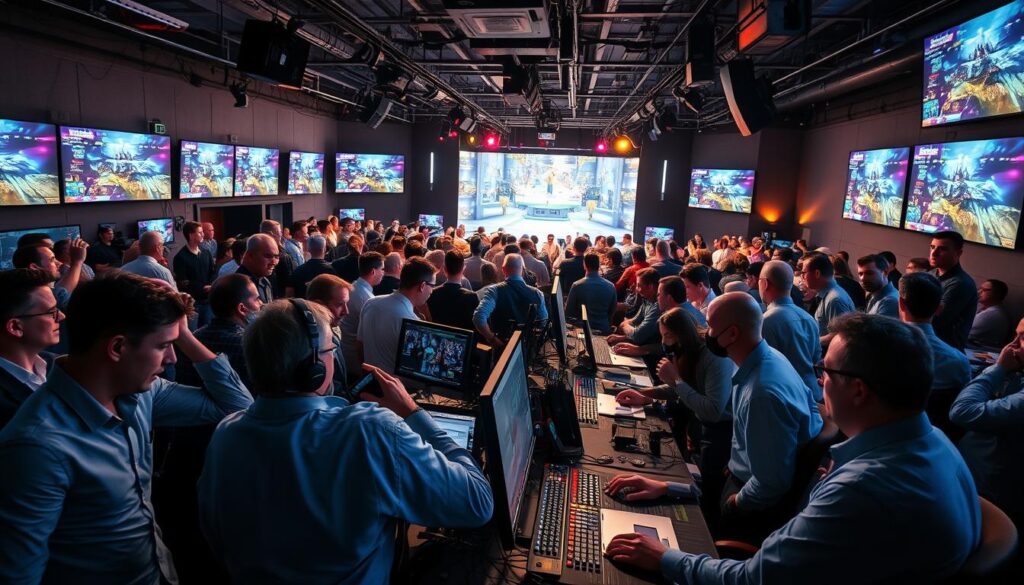
They switch views based on the game. The Technical Director is like a DJ at a stressful party. They mix feeds of tension, like a sniper duel or a player’s mouse problem.
Decisions must be made fast. A replay operator is ready with key moments. The producer’s calm voice guides you through the storm.
This is like a stock trading floor, but more intense. The crew works together, held by clear communication. A small mistake can ruin the live broadcast.
The crew’s fast talk is part of the magic. It creates a seamless stream for viewers. Knowing how it’s made adds to the appreciation. It’s why an ultimate guide to following live esports is so valuable.
This isn’t just entertainment. It’s managing adrenaline in real-time. The final product is a miracle of chaos, thanks to the crew backstage.
Post-Event Content Creation
The final match ends. The arena lights dim. For the audience, the show is over. But for the production team, the real work begins. The live broadcast was just the opening act.
Every Esports Event Stream creates a lot of raw footage. This material doesn’t just disappear. It gets improved, repackaged, and shared again. The VOD on YouTube Gaming becomes a treasure trove. A single highlight clip can spark a week of social media buzz on Twitter and TikTok.
It’s like digital alchemy. That epic team fight turns into a minute-long YouTube Short. A caster’s brilliant call becomes a viral meme. The post-game analysis leads to Reddit threads and podcast episodes. The event’s story goes on long after it’s over.
This post-event phase is where smart money-making happens. Sponsorship integrations live on in VODs. Merchandise links in video descriptions keep selling. Affiliate marketing tied to the event finds new fans. The stream may have stopped, but the money keeps coming.
The most successful Esports Event Streams know this. They’re not just producing a one-night show. They’re building a content world. Each broadcast plants seeds for months of material, drawing casual viewers deeper into the story. The aim is simple: turn a one-time viewer into a lifelong fan.
Your live stream is the headline. The content you create afterward is the whole newspaper. It’s the analysis, the opinions, and the ads. It’s what keeps people talking until the next big event comes along.