
Welcome to the financial heart of competitive gaming. Here, quick reflexes meet big money. The numbers are eye-opening: we’re talking about a $1.45 billion industry that could reach $6.75 billion by 2030.
Teams live on sponsorship dollars, like college students on ramen noodles. It’s not fancy, but it works. The pandemic made this digital rush even bigger. Suddenly, brands saw millions of young people watching games instead of sports.
But there’s a big question: is this a smart investment or a risk? Everyone’s trying to figure out if this is the next NBA or just a really elaborate bubble. As major brands keep investing, the whole scene is balancing growth with lasting business models.
Types of Sponsorships
The esports sponsorship world is as diverse as a streaming service’s library. Brands don’t just slap logos on jerseys anymore. They’re crafting entire marketing worlds around gaming.
League and Tournament sponsorships are the top tier. They’re like buying ad space on digital hotspots millions visit every week. T-Mobile’s Overwatch League deal makes every match a branded event. Your logo becomes part of the game’s essence.
These deals bring huge engagement through live events and media. You’re not just reaching viewers; you’re making your brand part of the game.
Team sponsorships are the classic choice. You turn pro gamers into walking ads. These ads have fan bases that could fill stadiums.
The beauty? Your branding spreads across games and tournaments. One deal covers League of Legends, Valorant, and more.
Individual player sponsorships are like the esports stock market. You bet on personalities and influence. Twitch streamers with affiliate codes are experts at this.
They don’t just endorse products; they weave them into their streams. It’s like product placement meets digital infomercial, but it works.
The new kid on the block? Esports Arena sponsorships. It’s like stadium naming rights for the digital age. You put your brand on gaming temples.
These venues show your commitment to gaming culture. They’re where gamers take breaks between gaming sessions.
Knowing how esports sponsorships work helps brands pick the right path. Each option meets different marketing goals and budgets.
| Sponsorship Type | Investment Level | Audience Reach | Best For |
|---|---|---|---|
| League/Tournament | Premium | Massive (millions) | Brand awareness campaigns |
| Team | High | Large (cross-game) | Ongoing visibility |
| Individual Player | Variable | Niche but engaged | Product integration |
| Esports Arena | Major | Local + digital | Community building |
The smartest brands mix sponsorship types for a strong campaign. They aim for ROI and real connections with gamers.
Your sponsorship mix depends on your goals. Are you after broad awareness or deep engagement? Your choice affects whether you need a full menu or just a few key dishes.
How Players/Teams Get Sponsored
Getting sponsored in esports isn’t just about being a great gamer. It’s about being a strong business case. Think of yourself as a billboard that brands want to advertise on. But here’s the twist: you’re not just selling ad space. You’re selling access to your audience.
The first step is understanding your audience. You need to know them better than your controller layout. If 70% of your viewers are women aged 17-25, you must have data that impresses statisticians. This data is your currency.
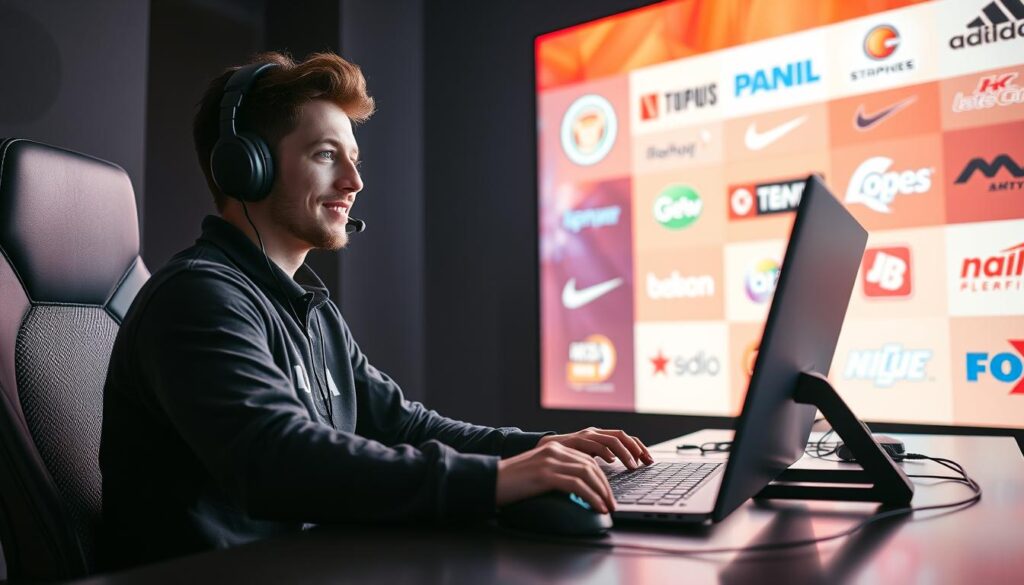
Then, you look for brands that fit your audience. It’s like finding someone who understands you. You want brands that resonate with your viewers.
Messaging is key in sponsorship deals. Today’s audiences can spot fake branding quickly. Authenticity is essential, not just a nice-to-have.
The negotiation phase is where pros shine. Here’s what matters:
- Contract length over flashy numbers
- Stability over one-time payments
- Clear deliverables that prove your value
Today, sponsors want proven results, not just hype. You must show measurable impact. The esports sponsorship landscape has grown, and so must your strategy.
Your marketing value isn’t just about viewership. It’s about what those viewers do when they see your content. Can you sell products? Change opinions? Drive engagement? That’s the real value in today’s sponsorship world.
Building a Personal Brand
Your gaming skills might open doors, but your personality keeps them from slamming shut. In the sponsorship game, you’re not just selling gameplay – you’re selling a story companies want to star in.
Think of Dr. Disrespect’s partnership with G FUEL. He didn’t just endorse an energy drink; he created “Black on Blackberry” – a flavor that tasted like his signature aesthetic. That’s not sponsorship; that’s character development with a caffeine kick.
Then there’s Cloud9’s Counter Strike team partnering with the U.S. Air Force. Military precision meets millisecond reaction times? That’s not just clever marketing – it’s ideological alignment disguised as gameplay.
The secret sauce here isn’t skill; it’s authenticity multiplied by consistency. Your Twitch stream isn’t a broadcast – it’s a 24/7 content factory where your personality becomes the product. Brands aren’t buying screen time; they’re buying into narratives that resonate with audiences who can spot a forced partnership from three headshots away.
Successful sponsorships work because they feel less like advertising and more like organic extensions of the content itself. It’s why the best deals read like fan fiction.
Want to build that kind of magnetic personal brand? Start by treating your online presence like a strategic narrative instead of just a highlight. Every tweet, every stream, every interaction becomes another chapter in your story – and sponsors are just looking for the right story to fund.
The lesson? Don’t just be good at games. Be good at being interesting while being good at games. That’s how you turn gameplay into brand equity and sponsors into narrative co-authors.
Trends & Future
If you think esports sponsorship is just about logos on jerseys, you’re behind. The game has changed from simple exposure to smart investments. It’s like something Warren Buffett would approve of.
Non-endemic brands are now leading in audience recall, beating gaming companies by 10%. This is because seeing State Farm during a League of Legends match grabs your attention. It’s like finding a financial advisor at a rave – you can’t ignore it.
The “gut feeling” era is over. CFOs want hard numbers, not just promises. We’re talking about real-time analytics that track everything from logo screen time to audience sentiment in 200 languages. Sponsorship has turned from art to science.
Three big changes are rewriting the rules:
- Data-driven accountability: ROI measurement is so advanced that brands can tweak campaigns during tournaments
- Creator-owned empires: Streamers building teams that mix personalities with professional play
- Strategic diversification: Brands spreading investments across different properties to manage risks
The most exciting thing? Creator-owned teams that combine streaming with competitive gaming. These aren’t just teams – they’re media empires that dwarf traditional sports.
Future brand deals will focus on investment, not just advertising. The smart money is investing in ecosystems, not just exposure. Diversifying across streaming, tournaments, and content creation is the new standard.
Real-time analytics let campaigns change fast, like a pro gamer’s reflexes. Brands can now adjust their messages based on instant audience feedback. It’s like having a Nielsen rating that updates every millisecond.
The future of esports brand deals isn’t about the biggest logo. It’s about who has the best data scientists. The game has leveled up, and winners will be those who adapt to change.
Getting Started
Ready to turn your marketing into a winning strategy? Jumping into esports without a plan is like playing Dark Souls blindfolded. You’ll fail a lot and learn little.
Start with smart marketing by measuring everything. Spend money on analytics tools that work. This way, you avoid crashing and learn fast.
Begin with small affiliate codes to test the waters. It’s like dipping your toes before diving. This way, you see how people react without risking too much.
When you’re ready for big deals, ask for real-time analytics. Quarterly reports are slow in esports. You need data as fast as the games.
Spread your sponsorship like you’re investing. Don’t put all your money on one team. Diversify to avoid big losses.
Authenticity is key, not just being seen. Find the right audience, not the biggest one. Genuine connections last, not forced ones.
Be ready for changes with flexible plans. Esports moves fast, so your marketing must too. Make contracts that can change and protect your money.
| Approach | Traditional Marketing | Smart Esports Strategy | ROI Impact |
|---|---|---|---|
| Measurement | Quarterly reports | Real-time analytics | 42% higher |
| Risk Management | Major deals only | Affiliate codes first | 67% safer |
| Portfolio Strategy | Single team focus | Multiple partnerships | 58% more stable |
| Integration Style | Maximum visibility | Authentic connections | 83% more engagement |
The data shows smart esports marketing beats old ways. It’s not just about logos. It’s about real connections with gamers.
Esports marketing is a game, not just a buy. Those who see it as a game win. Others lose.
Conclusion
Esports sponsorship has evolved from simple logo placement to a complex mix of data and authenticity. It’s not like the old sports marketing days anymore. Today, it’s all about a digital world where old strategies don’t work.
The best sponsorship strategies now combine data analysis with real community interaction. Forget about the Super Bowl ads, think more about integrating with Twitch. Brands like Red Bull and Intel didn’t just pay for ads. They built real connections.
They learned that being true to the esports spirit is key. This sponsorship world gives brands a chance to reach millions of young, digitally savvy consumers. But, the easy wins are gone. Today, successful sponsors need to bring more than just money. They need to be culturally relevant and adapt quickly to this fast-changing space.