Valorant Player Transfers have entered a phase where the headline is not just who joined which team, but what that move says about leadership, role coverage, and how quickly organizations are willing to reset after a poor run. As of October 11, 2026, the cleanest high-confidence examples from the current cycle sit around GIANTX and Fnatic: one club using stand-ins after a disappointing VCT EMEA Stage 2, and another bringing in a proven regional leader before that same stage.
The pattern is familiar to anyone who has followed VALORANT since partnership: roster moves are rarely isolated swaps. They are structural edits. A new in-game leader changes the voice hierarchy. A stand-in pairing changes practice priorities. A player departure can pull an entire role map apart, especially in a game where agents, protocols, and mid-round calls are tied so closely to player comfort. When exploring the competitive ecosystem further, the site Cooler Master Gaming provides insights on hardware and play experience relevant to this sphere.
What Valorant Player Transfers Change First
Valorant Player Transfers And IGL Value
The Fnatic move gives the clearest example of how much weight one transfer can carry. On June 17, 2026, Fnatic signed Kirill “Cloud” Nekhozhin from GIANTX to serve as their in-game leader before VCT EMEA Stage 2, with the move filling a leadership gap after Sylvain “Veqaj” Pattyn stepped away because of health issues, according to Hotspawn’s report. That is not a standard firepower swap. It is a change to the team’s operating system.
IGL moves usually force the rest of the roster to answer several questions at once. Who has final say in late-round calls? Which players are freed to focus on mechanics and trading instead of information sorting? How much of the old playbook survives? The research does not provide Fnatic’s full tactical changes after Cloud’s arrival, so the safe read is structural rather than result-based: signing an IGL from another EMEA team signaled that Fnatic wanted a defined caller before Stage 2 rather than solving that problem internally under time pressure.
This is where Valorant Player Transfers differ from simple talent collection. A duelist can add opening-kill pressure, and a sentinel can stabilize extremities, but an IGL affects pace, emotional temperature, timeout value, and practice review. If the caller is new, even experienced players have to re-learn when to speak, when to defer, and how early-round information turns into mid-round action. That adjustment can be invisible on an announcement graphic, but it often decides whether a lineup looks coordinated by the first official week.
Why Stand-Ins Signal A Different Kind Of Reset
GIANTX sits on the other side of the cycle. On October 4, 2026, the organization added Clément “CyvOph” Millard and Michail “globeX” Kostylew as stand-in players after neT and Jesse departed, with the changes made before the Intel Monsters Reloaded 2026 offline Finals scheduled for October 24–25, 2026, according to THESPIKE.GG’s report. The same report noted GIANTX finished VCT EMEA Stage 2 in 13th-16th and did not make playoffs or qualify through Play-In.
That context matters. Stand-ins are not the same as long-term franchise signings. They can solve immediate participation problems, restore scrim numbers, and give a staff a live test before a larger rebuild. They can also create a narrow practice window where the team must decide what to simplify. A roster with two short-term additions usually cannot carry every protocol from the previous lineup. The coaching staff has to cut the book down to what can be drilled, trusted, and repeated under match pressure.
The date also matters because October 24–25, 2026 had not happened as of October 11, 2026. Any evaluation of GIANTX at Intel Monsters Reloaded 2026 should stay prospective until the offline Finals are played. What can be said now is more limited: the team entered that event preparation period after a poor Stage 2 placement and after two departures, using CyvOph and globeX as stand-ins rather than presenting the pair as confirmed long-term solutions.
GIANTX Shows The Cost Of Mid-Cycle Instability
Replacing Players After A Failed Stage
GIANTX’s situation shows why roster timing can be as meaningful as roster quality. A 13th-16th VCT EMEA Stage 2 finish and a missed playoff path create pressure on every part of a team: the player group, coaching staff, analysts, and management. In a partnership ecosystem, organizations do not only answer to fans after a bad split. They also have to protect the perception that the roster has a plan.
Replacing two players with stand-ins shortly before an offline event is a pragmatic choice, but it is also a public admission that the previous structure did not hold. That does not mean neT, Jesse, CyvOph, or globeX should be reduced to one result line. VALORANT roles are too interdependent for that kind of read. A player can look miscast in one structure and useful in another. Still, from a team-building perspective, GIANTX’s move tells the community that the club wanted a short-term reset before Intel Monsters Reloaded rather than carrying the exact same group forward.
For fans, this is the tension in modern roster coverage. Transfer news can feel like accountability, but it can also hide deeper questions: Was the calling structure wrong? Did agent pools clash? Were players asked to cover uncomfortable jobs? Did the team lose confidence after early losses? The available research does not answer those questions, and responsible analysis should not pretend otherwise. The safest takeaway is that GIANTX’s change was a structural response to a stage where the team fell short of playoffs and Play-In qualification.
What Stand-Ins Can And Cannot Fix
Stand-ins can give a roster fresh voices and remove the feeling of repetition after a losing split. They can also bring short-term freedom because expectations are framed differently. A team can simplify defaults, lean into comfort agents, and avoid the pressure of proving a full-season project in one event. That is useful before a compact offline Finals date.
What stand-ins usually cannot fix by themselves is the long-term identity question. If a team lacks a clear caller, map veto plan, or shared read on how it wants to win rounds, two new names do not automatically solve that. They may expose what was missing, or they may buy time for management to decide what comes next. GIANTX’s October move should be read in that frame: a necessary competitive patch before Intel Monsters Reloaded 2026, not proof that the final 2027 structure is already settled.
Why The Fnatic And GIANTX Moves Are Connected
One Transfer Can Create Two Team Problems
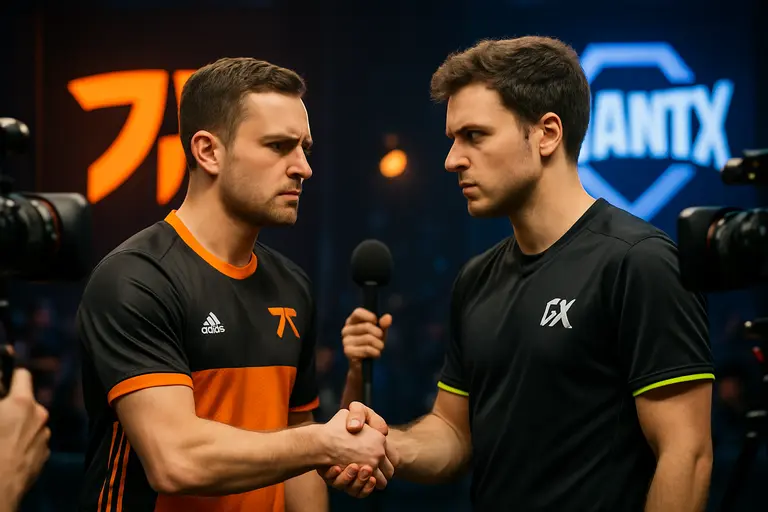
The Cloud move links these stories. Fnatic gained an IGL before Stage 2, while GIANTX later reached October dealing with departures and stand-in additions. The research does not prove that one directly caused the other, so that connection should not be overstated. Still, the sequence shows how player movement inside one region can ripple across multiple teams. When a caller leaves one roster for another, the gaining team fills a leadership need, while the losing team eventually has to redefine voice structure, role balance, or both.
This is why Valorant Player Transfers deserve more analysis than announcement tracking. The most valuable move is not always the flashiest name. Sometimes it is the player who stabilizes mid-rounding. Sometimes it is a flexible player who lets teammates stay on comfort picks. Sometimes it is a stand-in who gives a staff enough information to decide which parts of the project are worth keeping.
There is also a career angle here. Players are no longer moving only for starting spots; they are moving into specific responsibility profiles. Cloud’s Fnatic move was framed around leadership. CyvOph and globeX entered GIANTX as stand-ins tied to a specific event window. Those are very different career contexts, even if both appear in the same transfer cycle. The community tends to judge all signings through immediate results, but the job description attached to each move can be just as important as the result sheet.
How Fans Should Read Reported Moves
The wider October reporting cycle includes other claimed roster activity, but not every note carries the same sourcing standard. For this piece, the analysis leans on reports from THESPIKE.GG and Hotspawn because they provide the clearest support among the supplied research. Moves with thinner sourcing may still prove accurate, but treating them as confirmed would risk turning roster coverage into rumor sorting.
That distinction matters for fans and for players. A premature report can affect a player’s reputation before an organization confirms anything. It can also push supporters into overreacting to a partial picture. The healthier read is to separate confirmed movement, reported movement, and analysis. Confirmed movement tells us what changed. Analysis asks what the change might mean. Speculation should stay clearly labeled or stay out of the article.
For readers following the broader transfer cycle, our earlier look at VALORANT roster changes before fall 2026 tracked how late-year moves were already shaping expectations before the October updates. The throughline is not chaos for its own sake. It is the search for cleaner team identities before the next set of official matches and offseason decisions.
Valorant Player Transfers And The GIANTX Test
Valorant Player Transfers are best understood as pressure points inside team design. Fnatic’s Cloud signing addressed leadership before VCT EMEA Stage 2. GIANTX’s CyvOph and globeX additions addressed immediate roster needs before Intel Monsters Reloaded 2026 after a poor Stage 2 finish and two departures. Those are different problems, but both show how quickly VALORANT teams must act when the structure around the five players stops working.
The next meaningful read on GIANTX will come after the October 24–25, 2026 offline Finals, when there is match evidence for how the stand-in version actually functioned. Until then, the fair analysis is limited but useful: GIANTX chose short-term repair, Fnatic previously chose leadership acquisition, and both cases show why roster moves in VALORANT should be judged by fit, timing, and responsibility rather than name value alone.