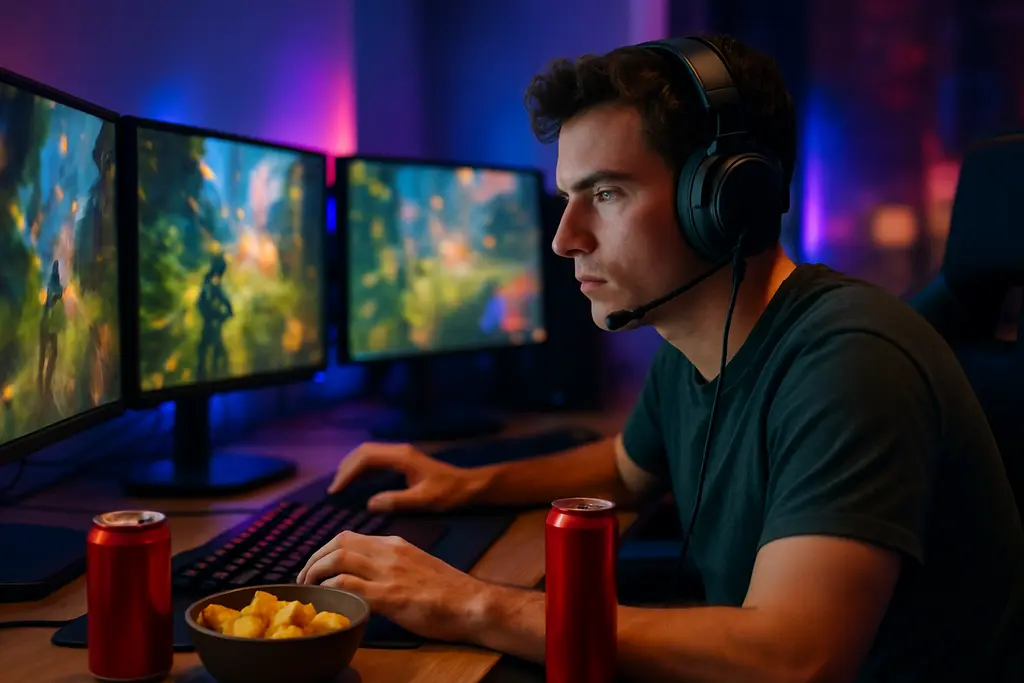
esports streaming quality has become a trust issue rather than a simple resolution race. By October 10, 2026, the discussion around competitive broadcasts has moved past whether platforms can push more pixels. Viewers now judge a stream by how clearly it shows fast motion, how quickly it reacts to the match, how fairly it serves mobile and low-bandwidth audiences, and whether co-streams feel like part of the same event instead of separate feeds with separate problems.
The hard data does show progress. NPAW’s Video Streaming Industry Report 2025 reported that live-stream bitrates rose 7% year over year, join times dropped by 18%, and buffer ratio improved by 10% compared with 2024. Those are meaningful gains for live video. Yet esports is an unforgiving use case. A slightly muddy team fight, a delayed reaction to a clutch, or a chat message spoiling a round can damage the viewing experience more than it would in slower entertainment categories.
Why esports streaming quality Still Feels Uneven
The 2K Upgrade Did Not End The Debate
Twitch made one of the clearest platform moves on June 17, 2026, when it launched 2K, or 1440p, streaming for Partners and Affiliates. The update raised maximum bitrates to about 9 Mbps for 1440p streams and about 7.5 Mbps for 1080p streams, while adding server-side transcoding for viewers with limited bandwidth, according to Twitch’s announcement. For esports creators, that was not a cosmetic change. Higher bitrate can help preserve readability in games with heavy particle effects, quick camera swings, and dense spectator overlays.
The community concern is that access and consistency still matter as much as peak capability. Research notes point to frustration from grassroots streamers who saw 2K access tied to Partner and Affiliate status, while some viewers complained that certain esports broadcasts no longer offered the 4K options they expected from earlier events. Those complaints should be handled carefully because they come from community feedback rather than a single platform-wide rule. Still, they show the gap between what a platform can support at the top end and what the average viewer sees during a real match day.
Where esports streaming quality Complaints Start
Most complaints start with a mismatch between advertised quality and perceived quality. A broadcast can carry a higher nominal bitrate and still look soft if compression, re-encoding, scene motion, or player-device limits reduce what viewers actually see. In esports, that problem is easy to notice. A viewer does not need a technical background to see a minimap blur during a rapid camera pan or to feel that a spray transfer looks smeared on stream.
The tension in esports streaming quality is that each improvement creates a new expectation. Once audiences know that 1440p is possible, 1080p feeds are judged more harshly. Once transcoding helps lower-bandwidth viewers, mobile users expect fewer compromises. Technical readers who compare creator setups across entertainment platforms can also explore Rave Tech as a related network resource, enhancing their understanding without focusing solely on spec chasing but rather on trust during intense matches.
Latency Has Become The Flashpoint
Delay Damages Shared Match Moments
Latency has become the sharpest community concern because it affects the social layer of esports. Research from June 2026 cited in the notes found that viewers are highly sensitive to delays in the 20-to-60-second range, especially when chat, social media, live score apps, or friends in voice chat reveal action before the video reaches them. That problem is not abstract. Esports viewing is built around shared reactions: the ace, the steal, the overtime retake, the bracket-saving clutch. If half the audience reacts before the stream shows the play, the broadcast loses some of its communal value.
Community complaints about delay also connect to competitive integrity. Public match streams often need some delay to reduce information abuse, but too much delay can make live discussion feel broken. The harder issue is inconsistency. Production encoding, content delivery, playback buffering, and viewer settings can each add time. If one feed is several seconds behind another, co-stream chat may react to a kill before the main broadcast shows it. That makes viewers feel as if the event is out of sync, even if every piece of the pipeline is functioning within its own limit.
- Resolution helps with clarity, especially for UI, distant targets, and fast camera work.
- Bitrate affects motion clarity, but higher numbers do not guarantee a cleaner image after compression.
- Latency shapes chat timing, spoiler risk, and the sense that a match is being experienced together.
Co-Streams And Multi-Feed Production Change The Standard
Creator Feeds Need Consistent Expectations
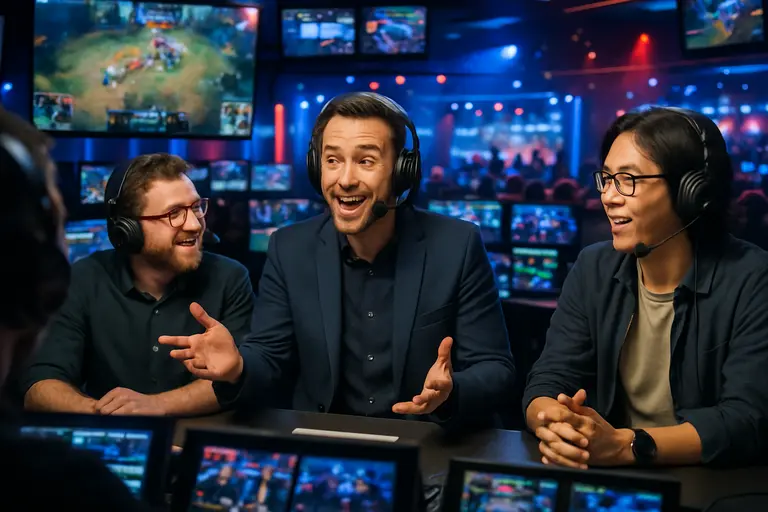
Co-streaming has turned broadcast quality into a network of experiences rather than one master feed. The research notes cite a July 8, 2026 esports live-streaming trends report that found esports audiences consumed about 2.7 billion hours across 1,900 tracked events in 2025, with co-streaming accounting for 52.9% of watch time. That scale changes the production brief. A tournament organizer can run a strong main feed and still face viewer complaints if major community streams have lower clarity, different delay, or inconsistent audio balance.
This is why co-stream policy is no longer just a rights question. It is also a quality-control question. If creators carry a large share of the audience, they become part of the event’s public face. A local-language co-stream may serve fans better than an official English desk, but the viewer still expects the match feed to hold up. For a deeper read on why creator-led broadcasts changed audience behavior, our coverage of community co-streams tracks the same pressure from the fandom side.
Parallel Feeds Solve One Problem And Create Another
The September 2026 research notes describe events using multiple feeds at once: a main high-bitrate feed, mobile-optimized versions, and player point-of-view streams. That setup makes sense because esports viewers do not all watch from the same device or connection. A student on mobile data, a creator restreaming commentary, and a fan watching from a living room screen have different needs.
The risk is that multi-feed production can make quality feel uneven if expectations are not clear. A mobile-optimized feed should not be judged like a high-bitrate desktop feed, but viewers need to understand why the image differs. Player POV streams can add tactical value, but if they lag behind the main broadcast or use softer encoding, they can frustrate viewers who came for competitive detail. Better feed labels, clearer delay expectations, and stable audio standards would do more for trust than simply adding another video option.
The Community Test For esports streaming quality
What Viewers Are Really Asking For
The next trust marker for esports streaming quality is not one magic number. Viewers are asking for clarity that matches the game, delay that does not break shared reactions, and platform rules that do not make strong production feel available only to the top tier. Broadband limits remain part of the problem, especially for streamers whose upload capacity cannot hold a stable bitrate. Device diversity also matters: a feed that looks acceptable on a phone may disappoint on a monitor, while a high-end feed may be unusable for viewers with weaker connections.
For tournament organizers, the practical read is simple: quality has to be planned across the full audience path. That means testing motion-heavy scenes, checking delay across official and creator feeds, offering sensible fallbacks, and explaining why certain feeds are built for certain devices. For platforms, the pressure is to make higher-quality tools feel less gated while preserving access for viewers who cannot sustain the top bitrate. The community is not asking for perfect video in every case. It is asking for fewer surprises when the match matters most.